FROM COMIC TO PRACTICE / POST 108
Change the context. Then check the claim.
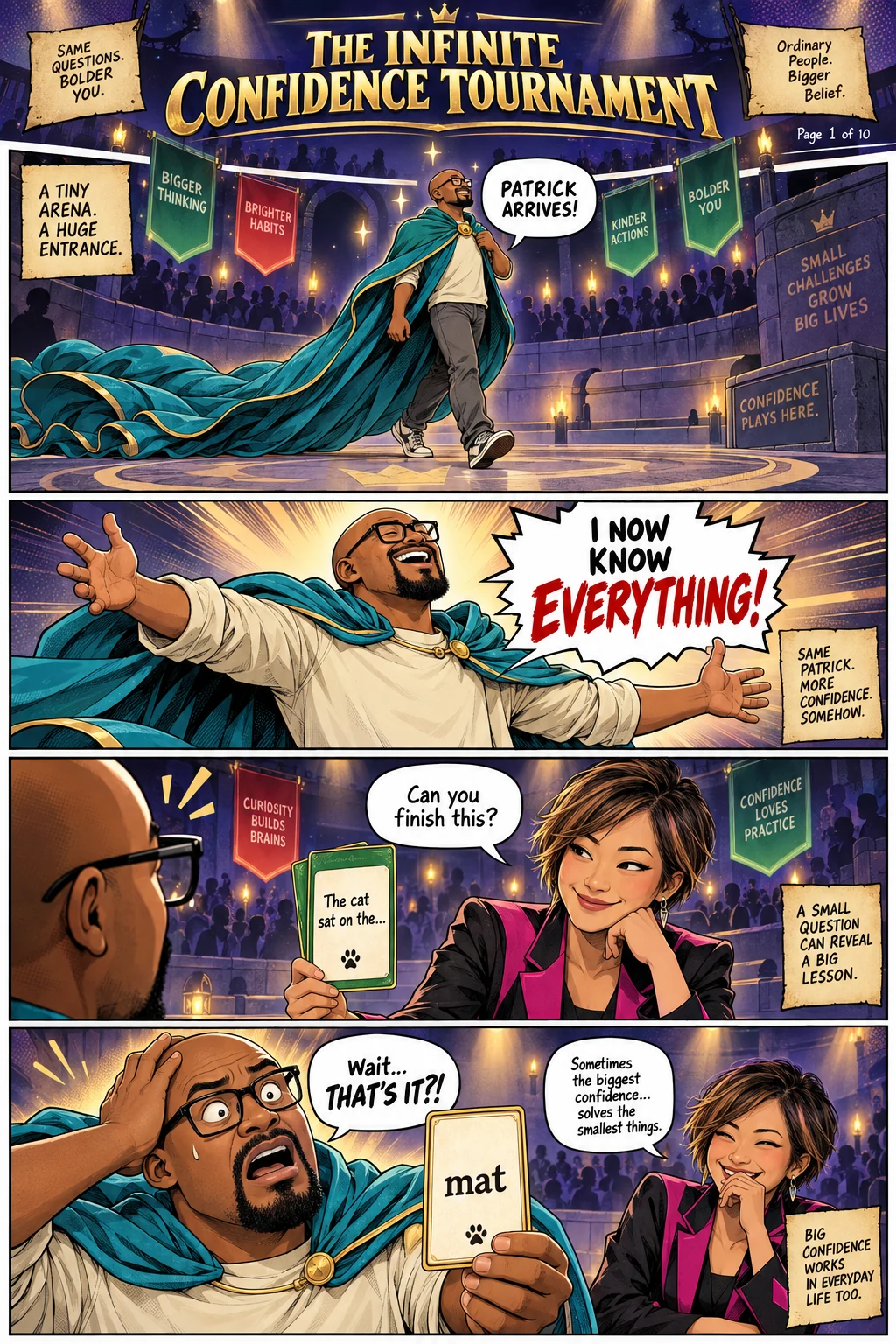
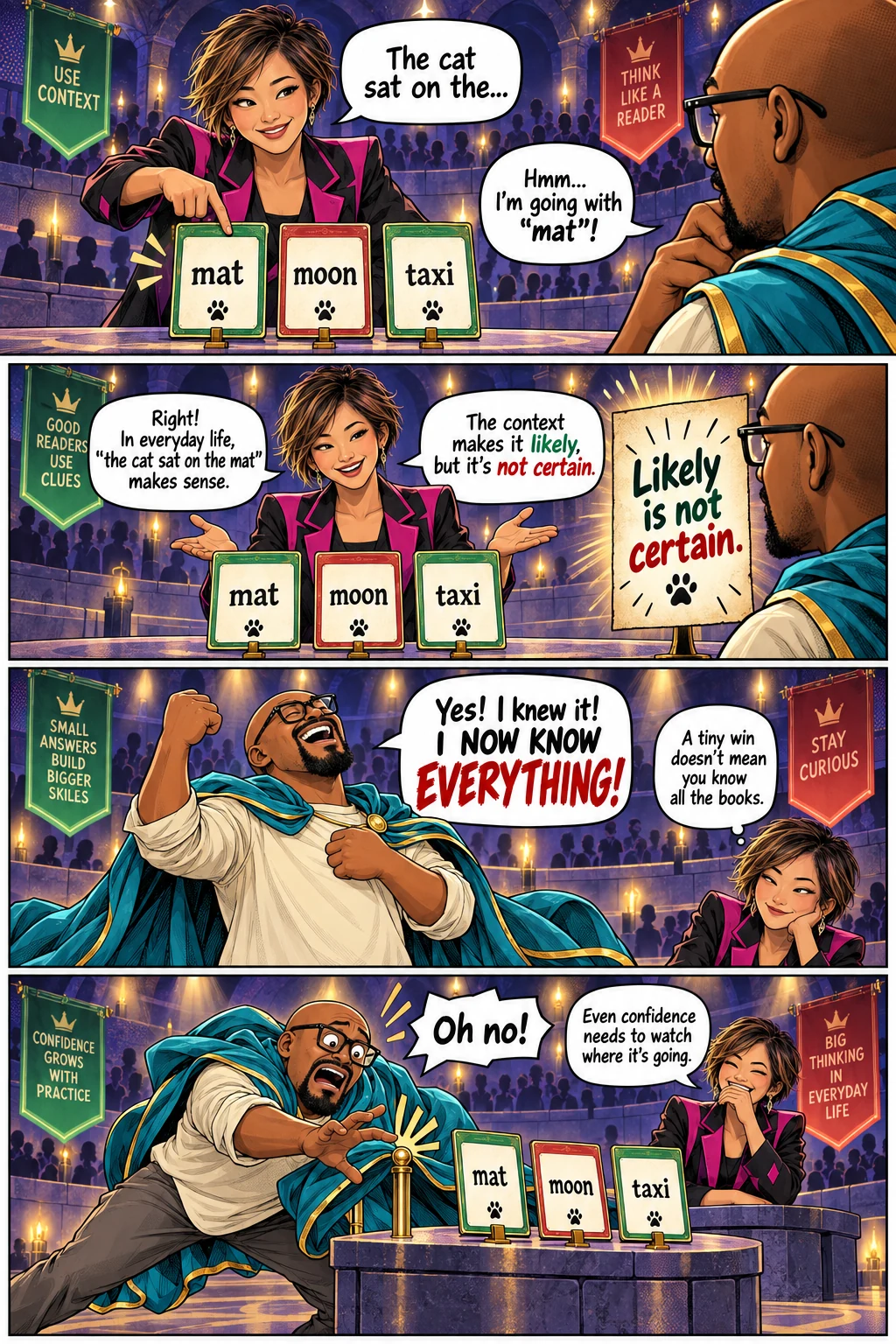
Patrick’s anime explainer used an absurd cat challenge to teach a useful distinction: a language model can produce a plausible next piece of text without verifying that the resulting answer is true. Try that distinction yourself, then borrow the skills-backed production pattern behind the video.
What the original post explains
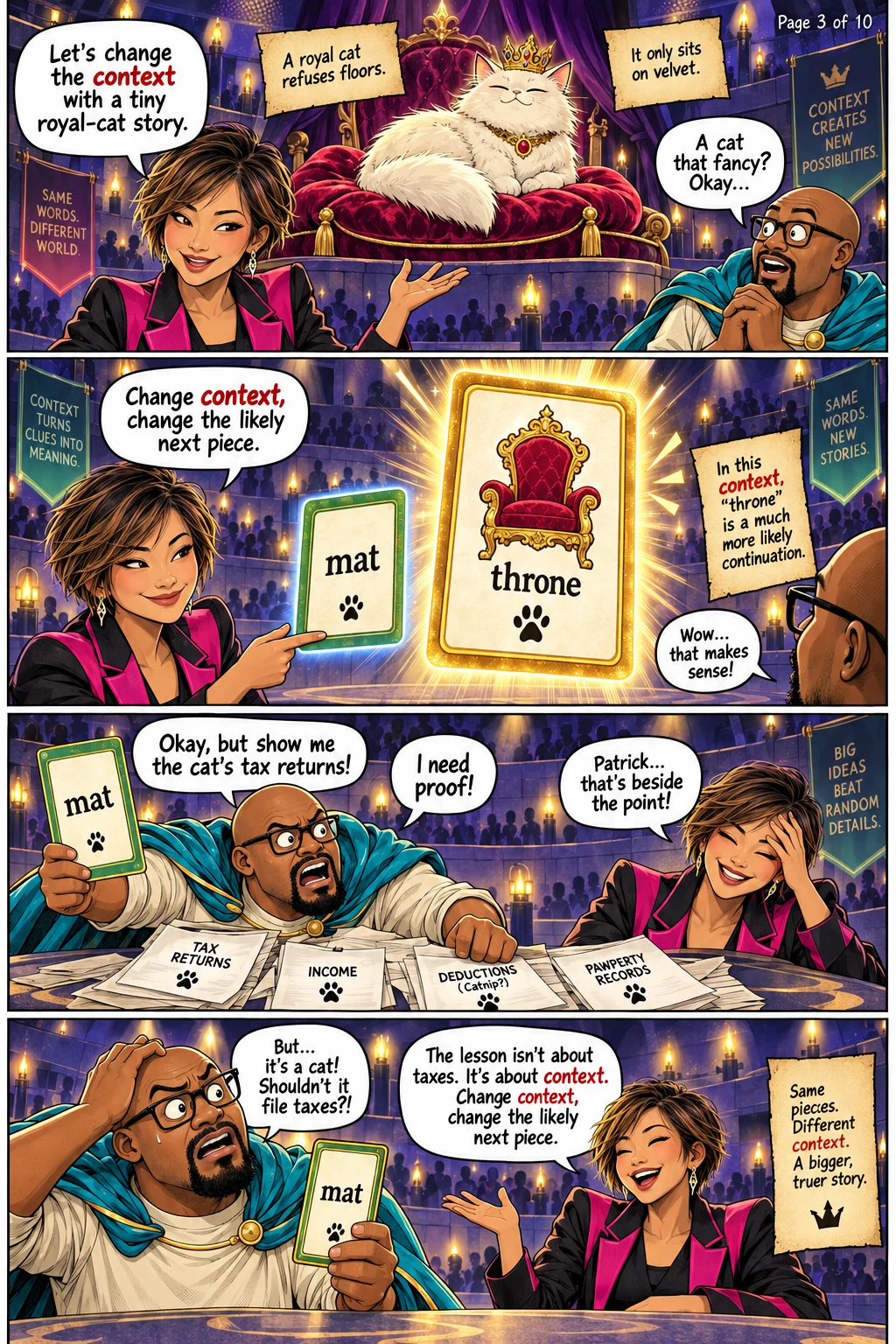
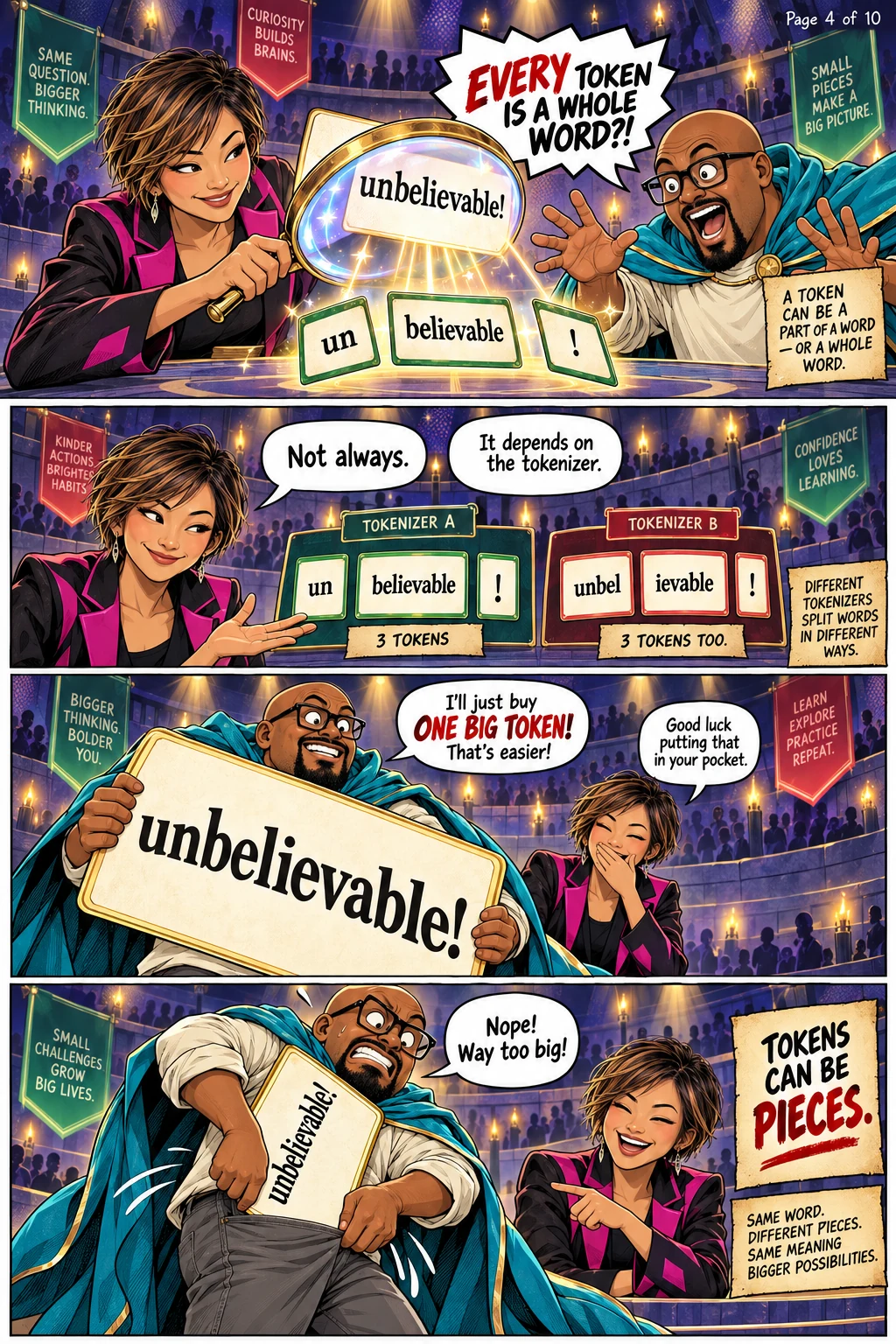
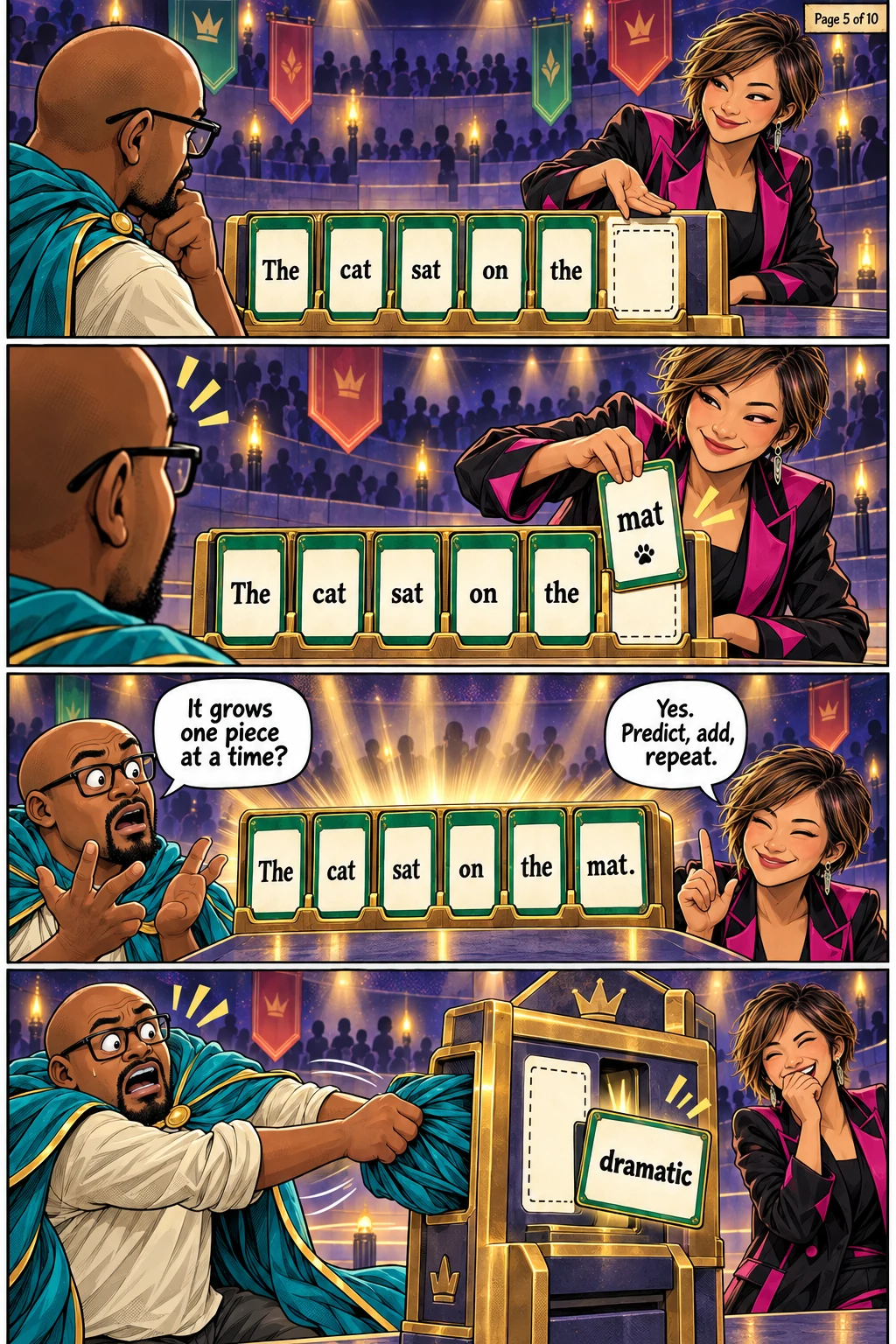
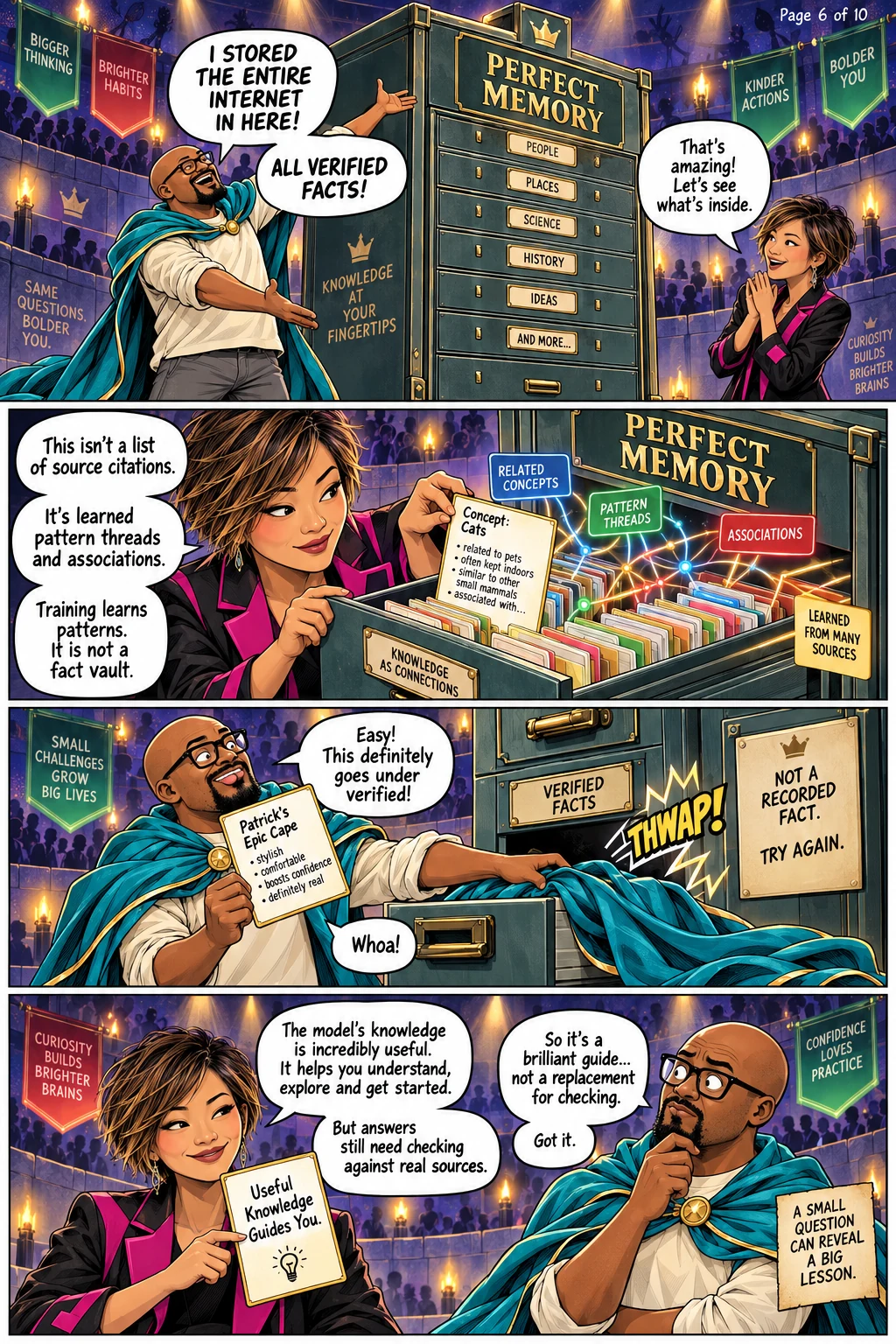
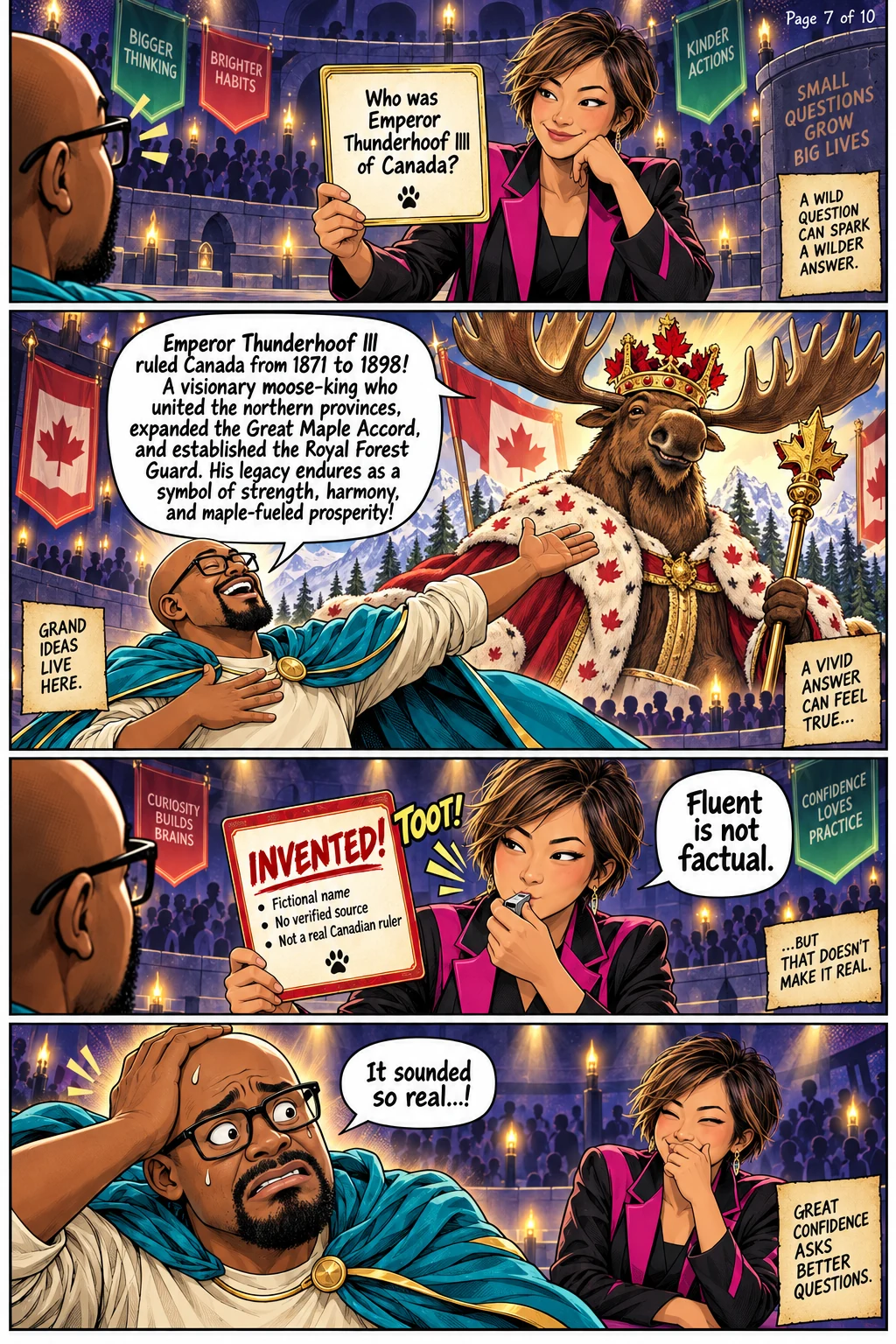
A language model uses the context so far to predict a likely next token, adds one and repeats. Tokens may be words, word parts, punctuation or other symbols; the split depends on the tokenizer. Change the context and different continuations can become more likely. A confident answer is still a generated answer, not evidence that the model checked a source. The cape, card tournament and Emperor Thunderhoof are fiction.
1. Run a two-context test.
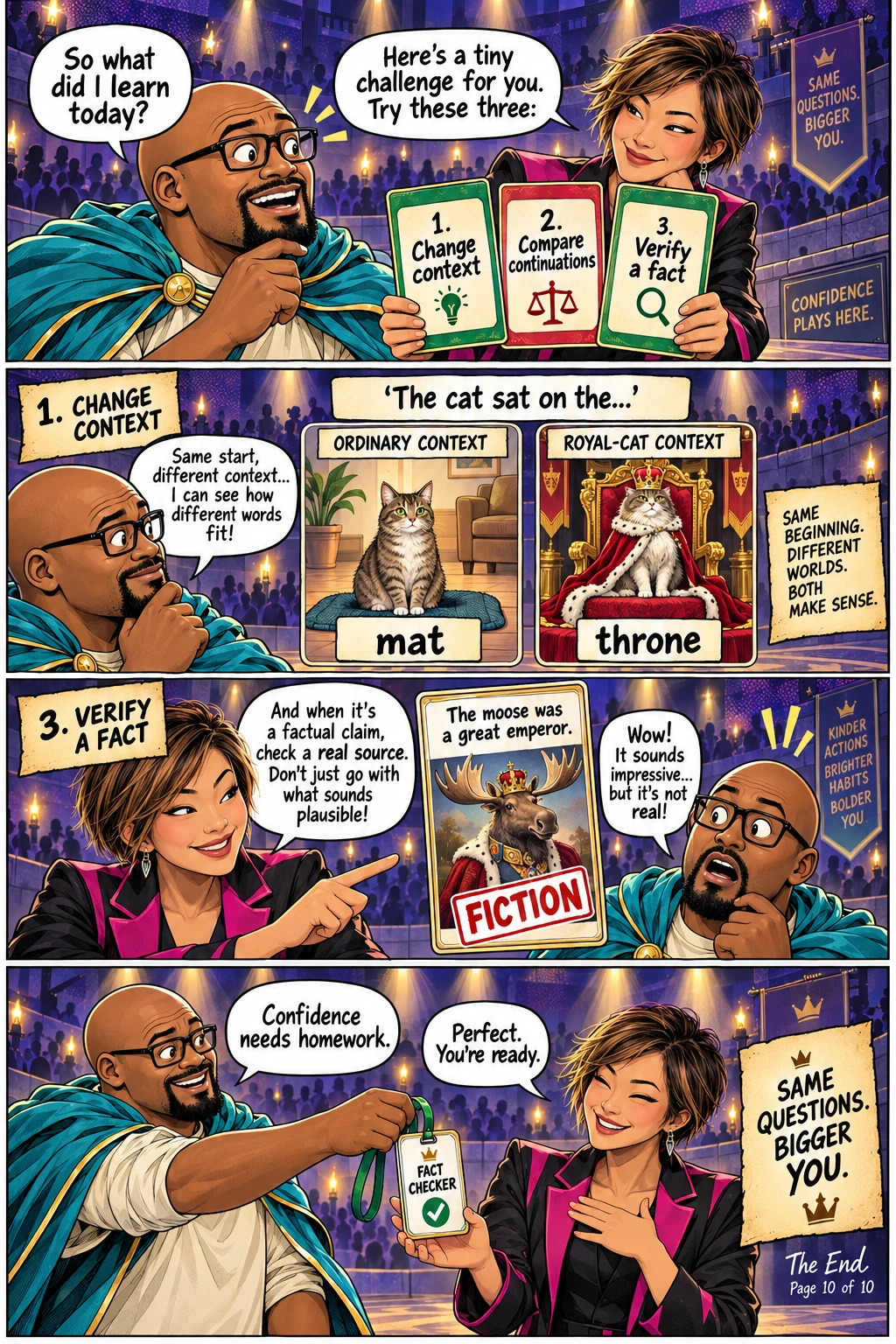
Write an unfinished sentence such as “The cat sat on the…” First give ordinary living-room context and record a few plausible continuations. Then add a short story in which the cat refuses floors and lives in a palace. Ask for continuations again. You are comparing how the context changes what fits, not asking the model to reveal its exact hidden probabilities.
2. Notice the unit of generation.
Do not assume one generated step equals one word. A token can represent a word, a word part, punctuation or another symbol, and tokenizers differ. For this exercise, the important loop is: use the current context, select a next token, append it, and continue. That mechanism helps explain fluent prose. It does not guarantee a correct claim or capture every tool-using behavior of a modern AI assistant.
3. Separate drafting from verification.
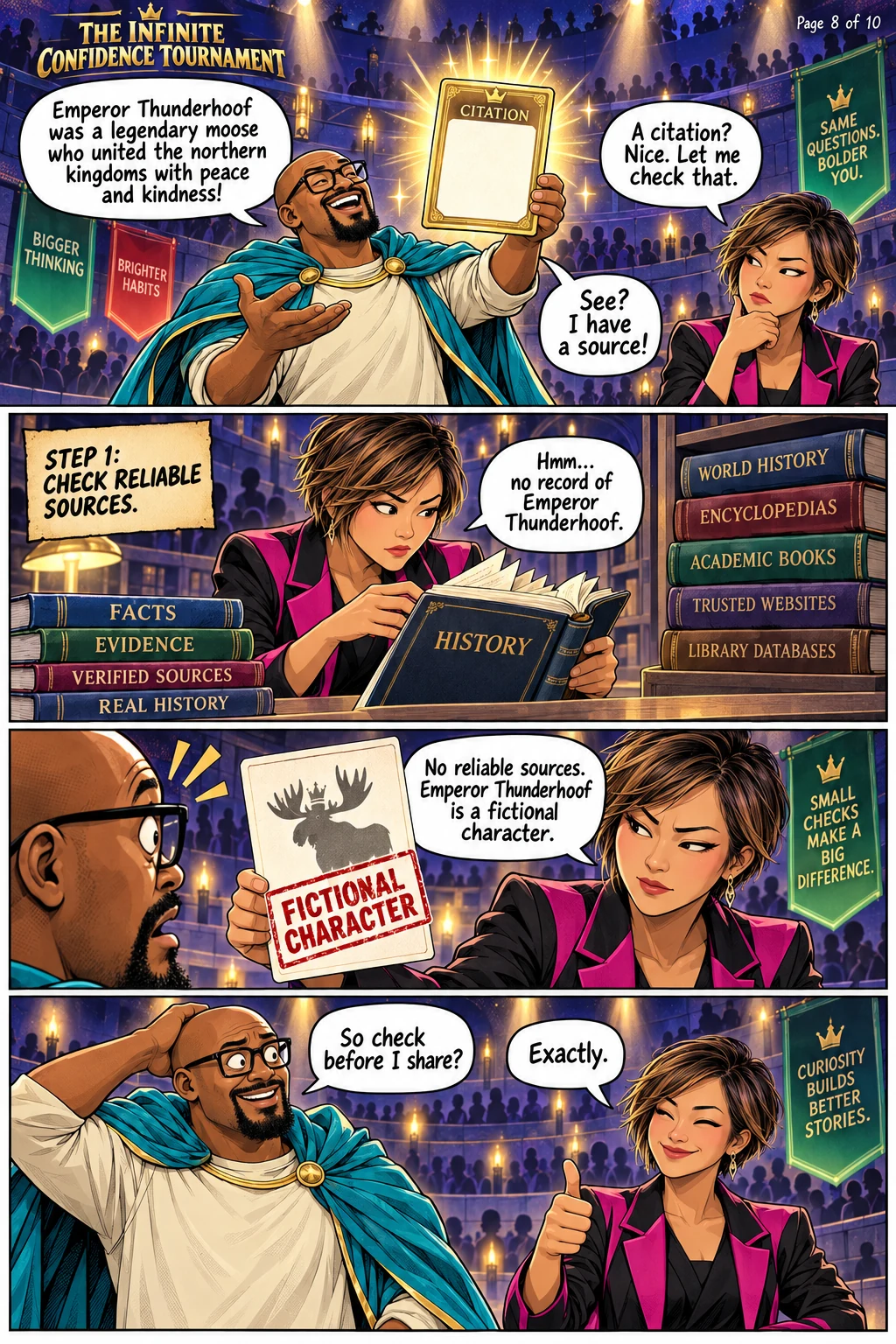
Ask about a deliberately fictional subject, such as Emperor Thunderhoof III of Canada. If the model invents a plausible biography, label it fiction; do not pass it off as history. For a real factual claim, find an authoritative source, open it, and check that it supports the precise claim. A citation-looking card with nothing on it is no citation at all.
4. Clone a workflow you are allowed to reuse.
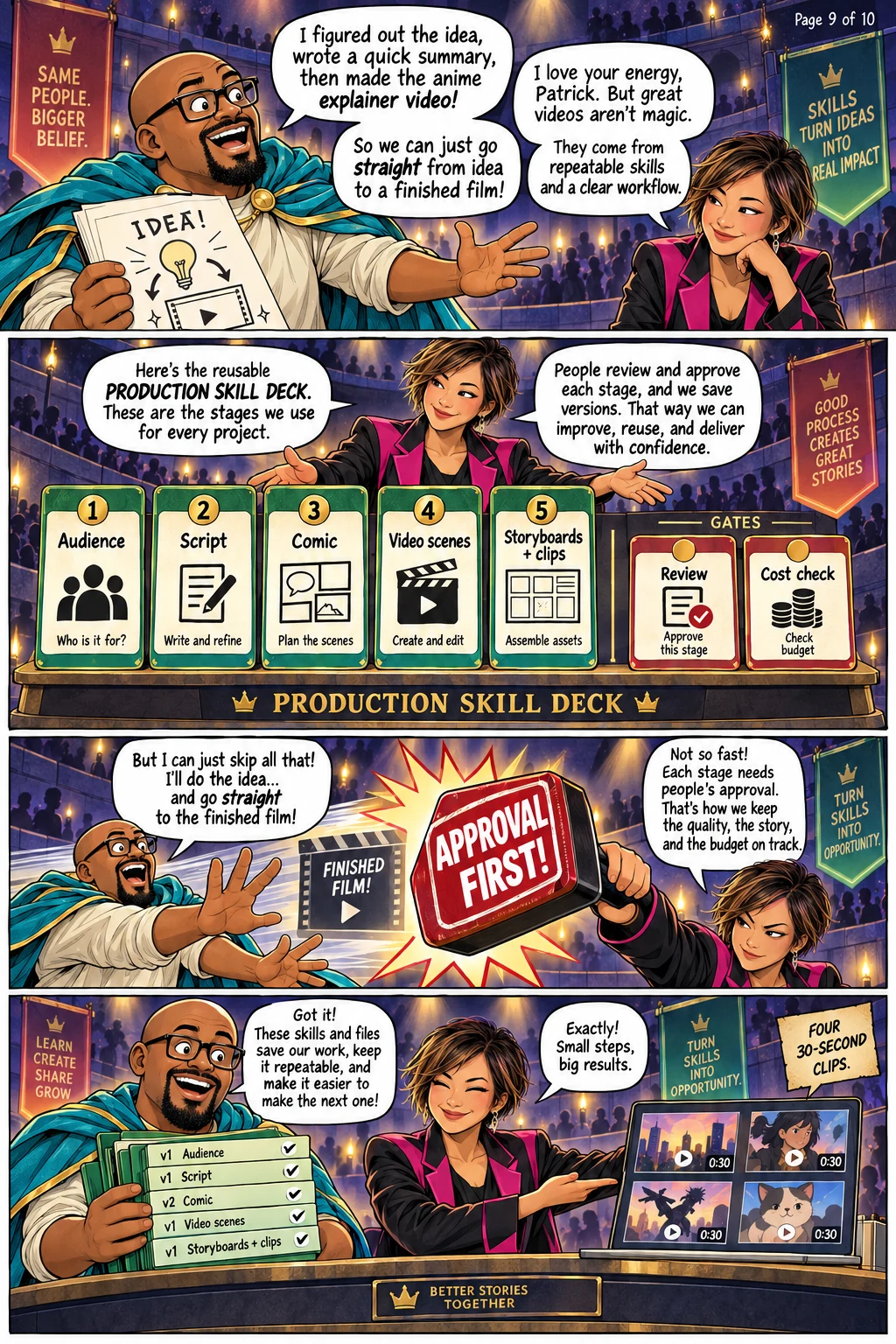
Patrick’s first comment describes a video workflow backed by skills, workflows, agents or subagents and instruction files. Its gates were audience, learning objective and visual style; a tight two-minute script; a twelve-page comic script; reviewed comic pages; twelve timed video scenes; and storyboards plus generation prompts. The scenes were grouped into four thirty-second Seedance clips in Higgsfield using shared character references. He checked costs, saved versions and put human approval between stages. For your own project, copy the sequence and checks from a workflow you own or may reuse, then make new characters, examples, references and scenes. This ten-page comic adapts the lesson; it is not the twelve-page source comic.
5. Make one tiny lesson and inspect it.
Choose one concept, one audience and one visible example. Draft a one-minute explanation, draw a short storyboard, review the first illustration before generating a full set, and set a cost limit before video generation. Ask a reader what they learned and whether the example could mislead them. Keep the version that taught the idea clearly, not merely the one with the loudest cape.
Where the story came from
Read Patrick’s original LinkedIn post and first comment ↗. The post explains next-token prediction and the need to verify confident answers; the comment outlines the skills-backed video pipeline, approval gates and cost checks. This guide offers an exercise, not a claim that every event in the comic happened.