FROM COMIC TO PRACTICE / POST 003
Make the story land in another language.
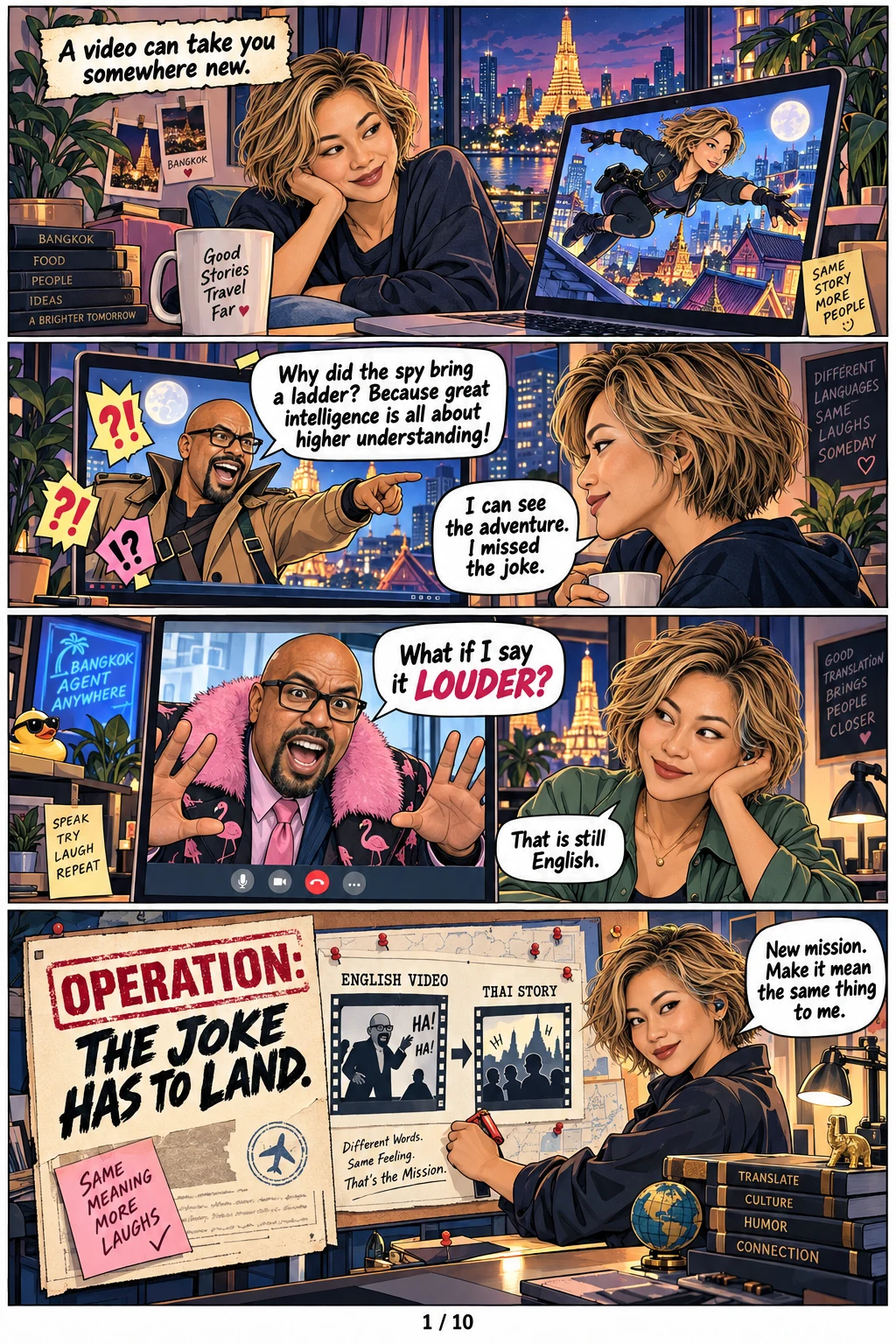
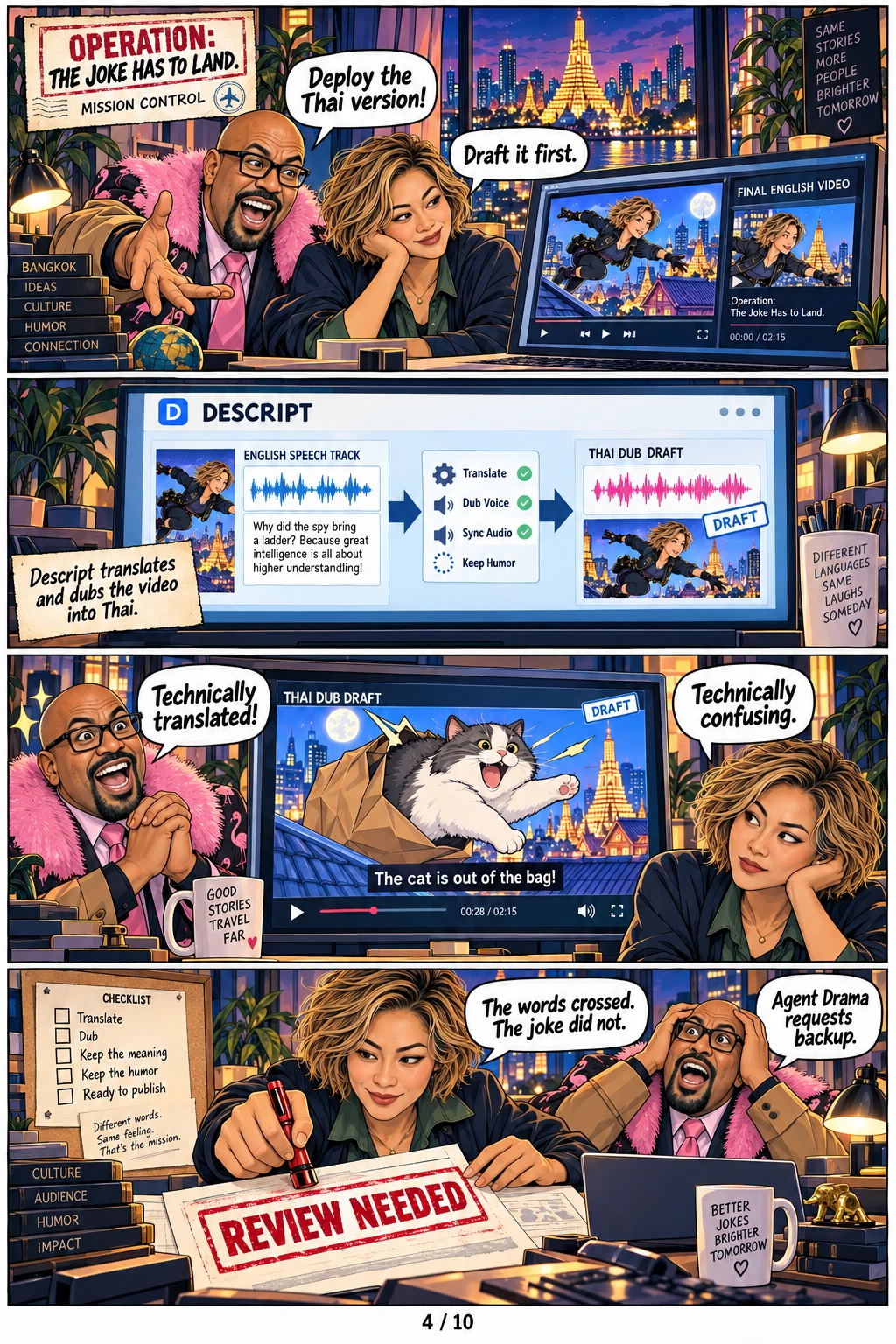
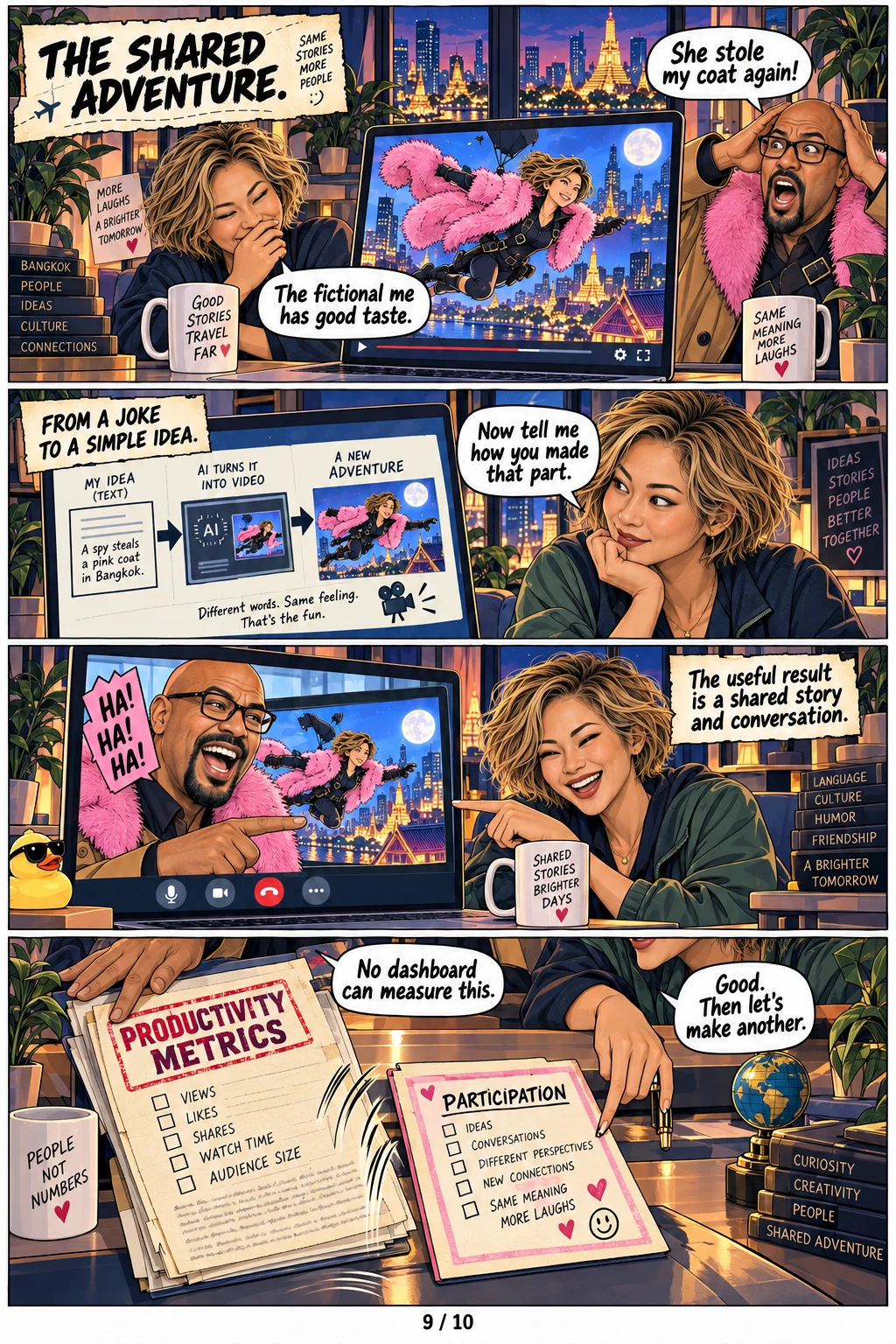
Patrick made playful AI videos in which Su could have impossible adventures. He used Descript to translate and dub them into Thai so she could follow the jokes and talk with him about the ideas. The best test was whether she understood and enjoyed the result.
What Patrick used
Source: his existing English-language AI videos. Translation and dubbing: Descript. Human review: Su could tell him when the Thai sounded strange. The fictional spy mission is a teaching device. The checks below help a reader adapt the workflow; Patrick’s post does not claim that he used every optional step.
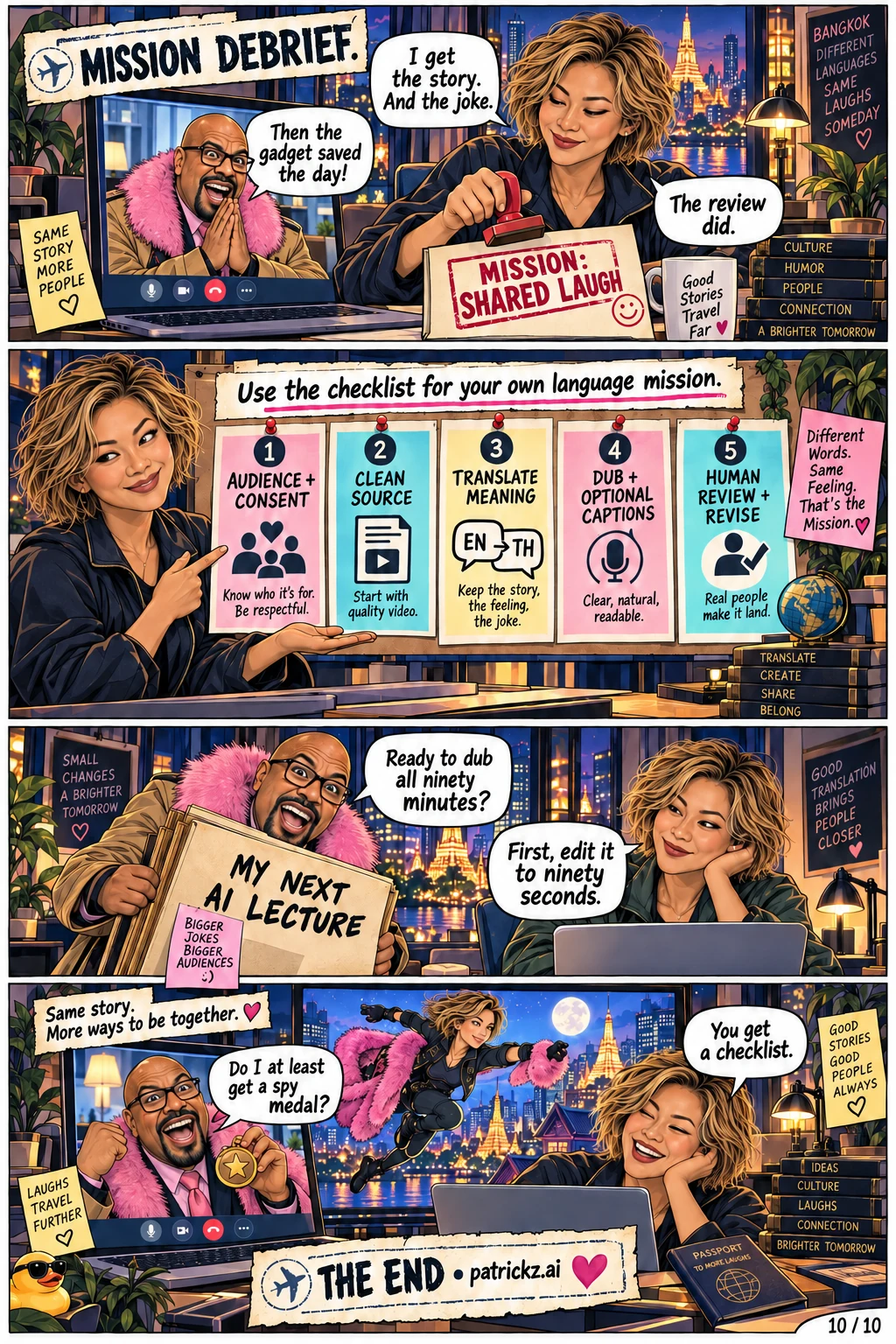
1. Start with the person, not the software.
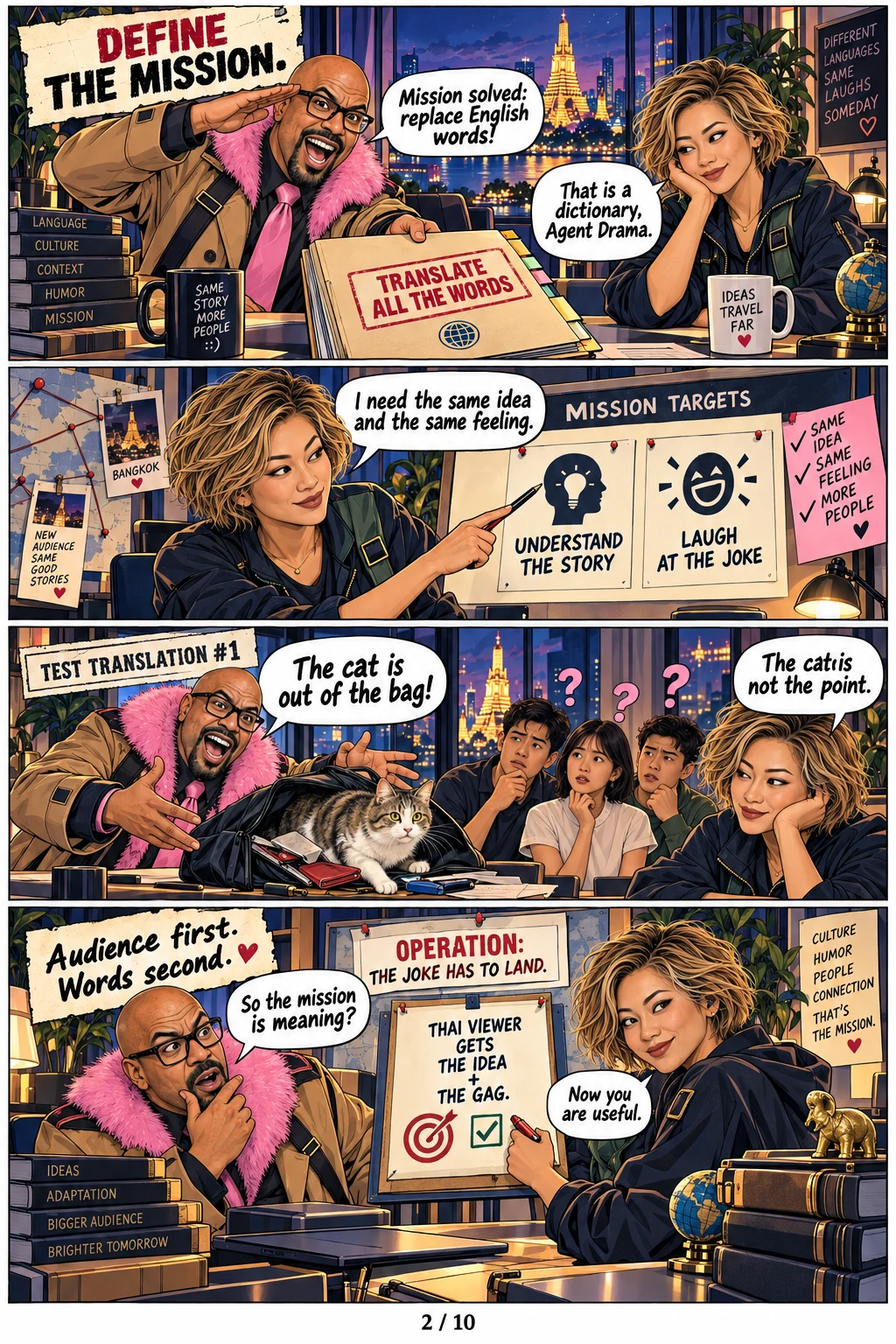
Ask who should understand the video and what you hope they will get from it. In Patrick’s case, the point was a shared joke, a story and a conversation. If another person’s likeness, voice, personal history or medical story appears, decide together what may be made and shared. Permission for a private video is different from permission for a public post.
2. Prepare a clear source.
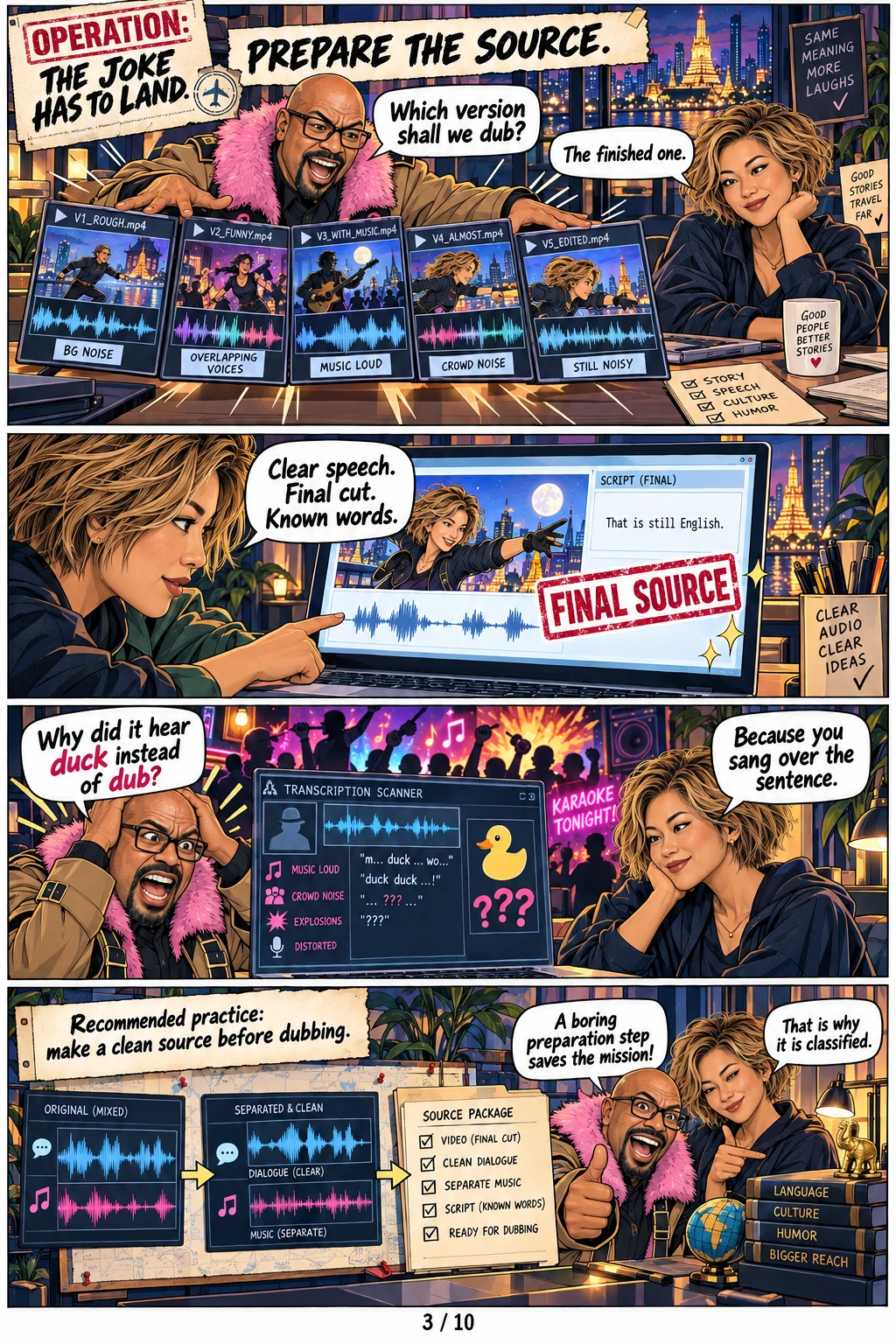
Choose the final short segment and, if available, provide its script or a checked transcript. Clear speech makes it easier to notice translation mistakes. This is a recommended preparation step for your version, rather than a detail claimed in Patrick’s post.
3. Dub for meaning.
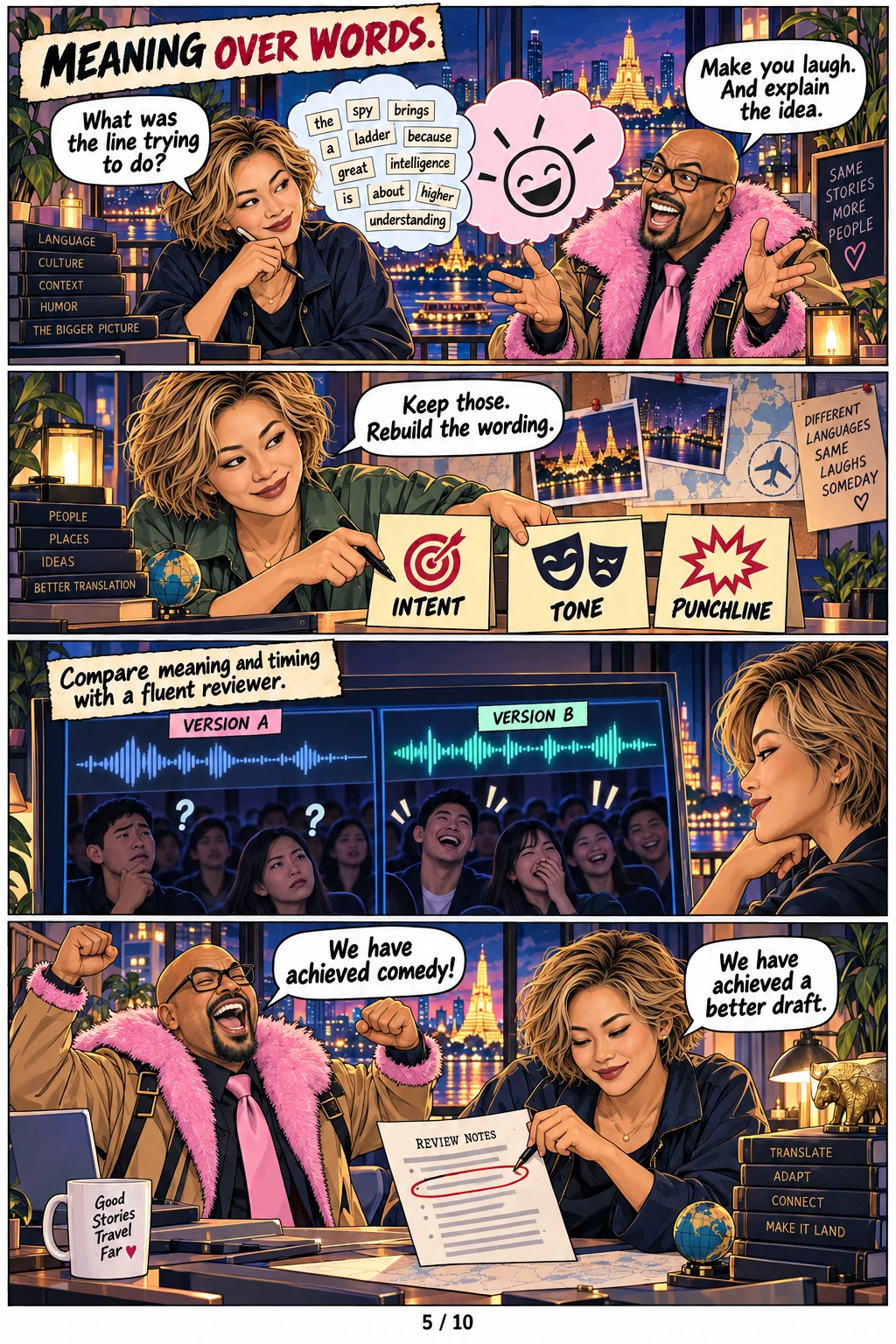
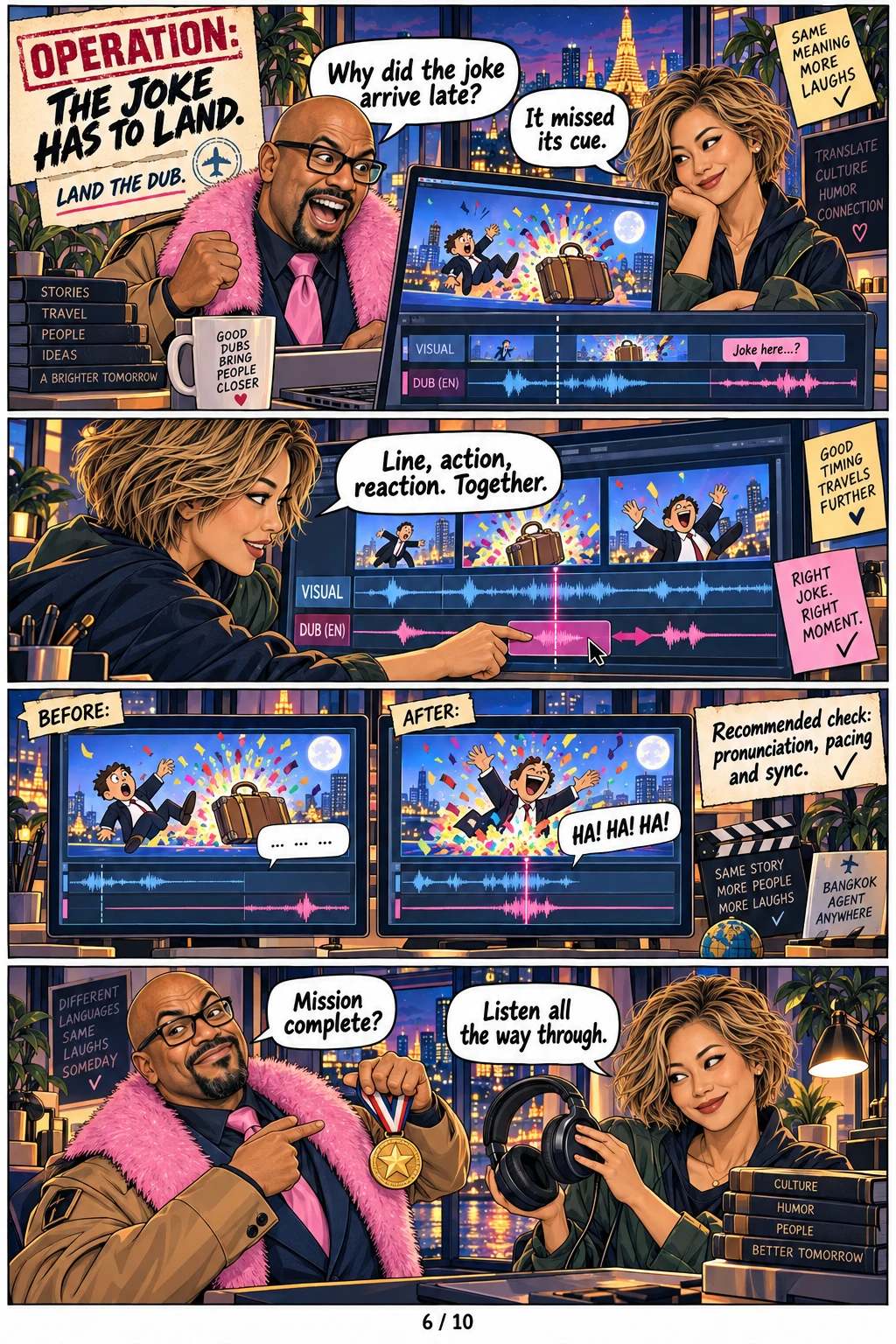
Use Descript to make a Thai translation and dub draft. Tell the translator who is speaking, what the scene is doing, whether the line is affectionate, deadpan or deliberately ridiculous, and which names should stay unchanged. A literal sentence can preserve words while losing the joke. Compare the meaning, tone, timing and pronunciation with someone who knows the audience and the language.
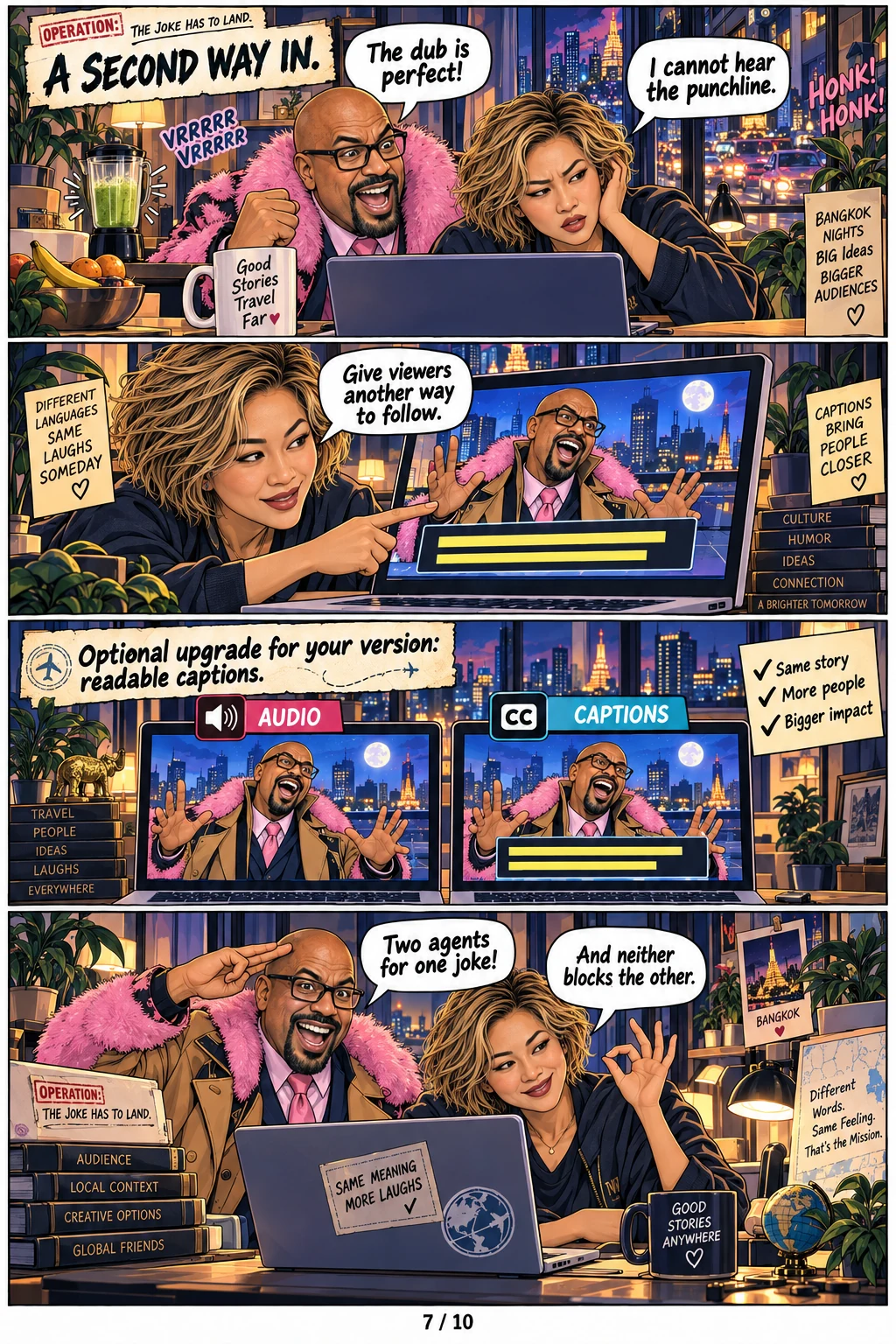
4. Offer another way to follow, if it helps.
Readable Thai captions can support a dub in noisy or silent viewing. Keep them high-contrast, on screen long enough to read and clear of the action. This is an optional recommendation for readers; the original post confirms dubbing but does not say Patrick added captions.
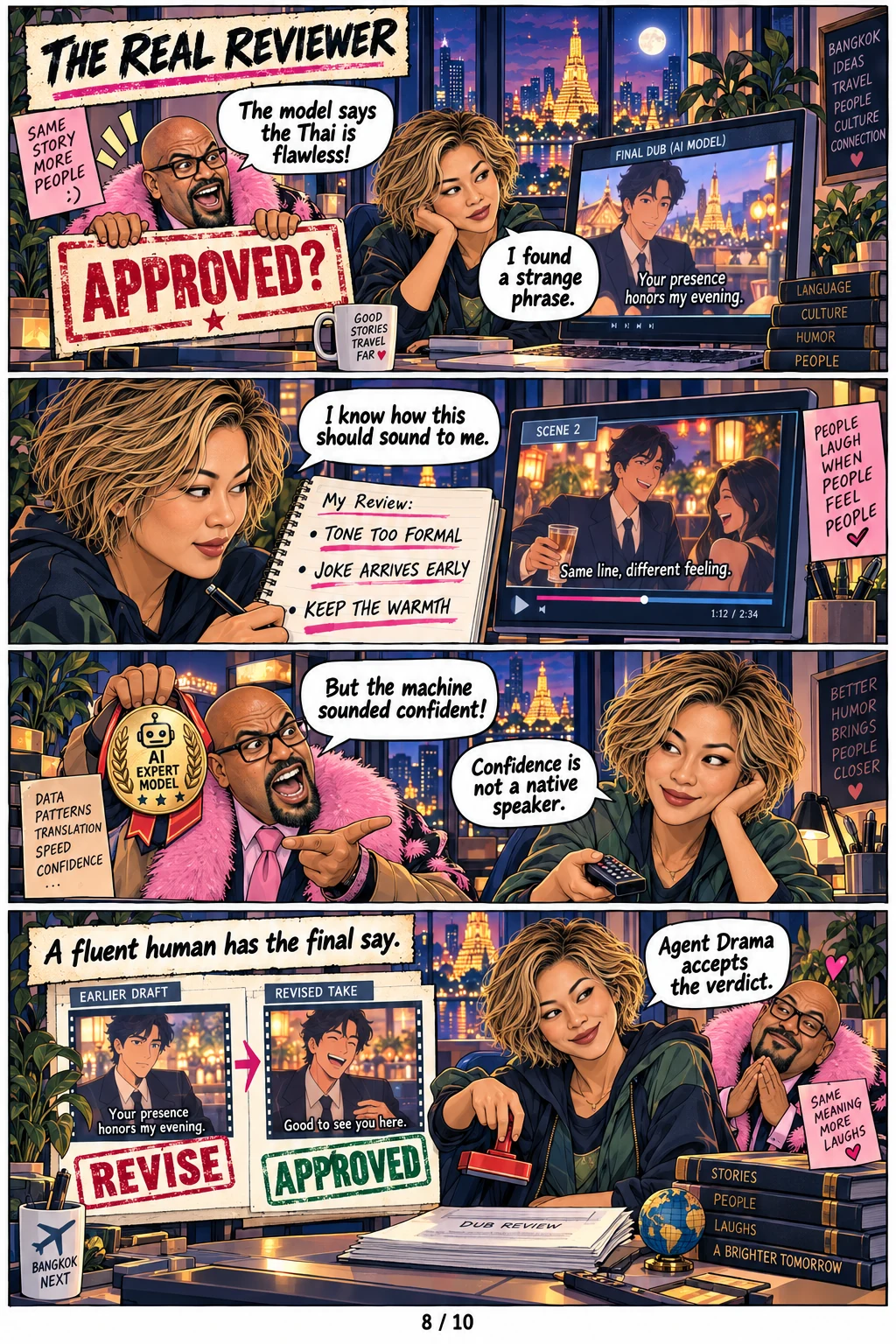
5. Let the intended viewer decide.
Watch the whole result with the person it is for. Ask where a phrase sounds odd, a joke arrives late or an explanation needs a simpler visual. Revise and watch again. The goal is participation and a shared moment, not a claim that AI solved a medical problem or that an automatic dub is perfect.
Where the story came from
Read Patrick’s original LinkedIn post ↗. It describes why he made the videos during Su’s recovery, why English limited the experience, and how Descript’s Thai dub let her follow the story and critique the language. The spy operation and dialogue are invented for the comic.