FROM COMIC TO PRACTICE / POST 002
Make a silly project that teaches a serious workflow.
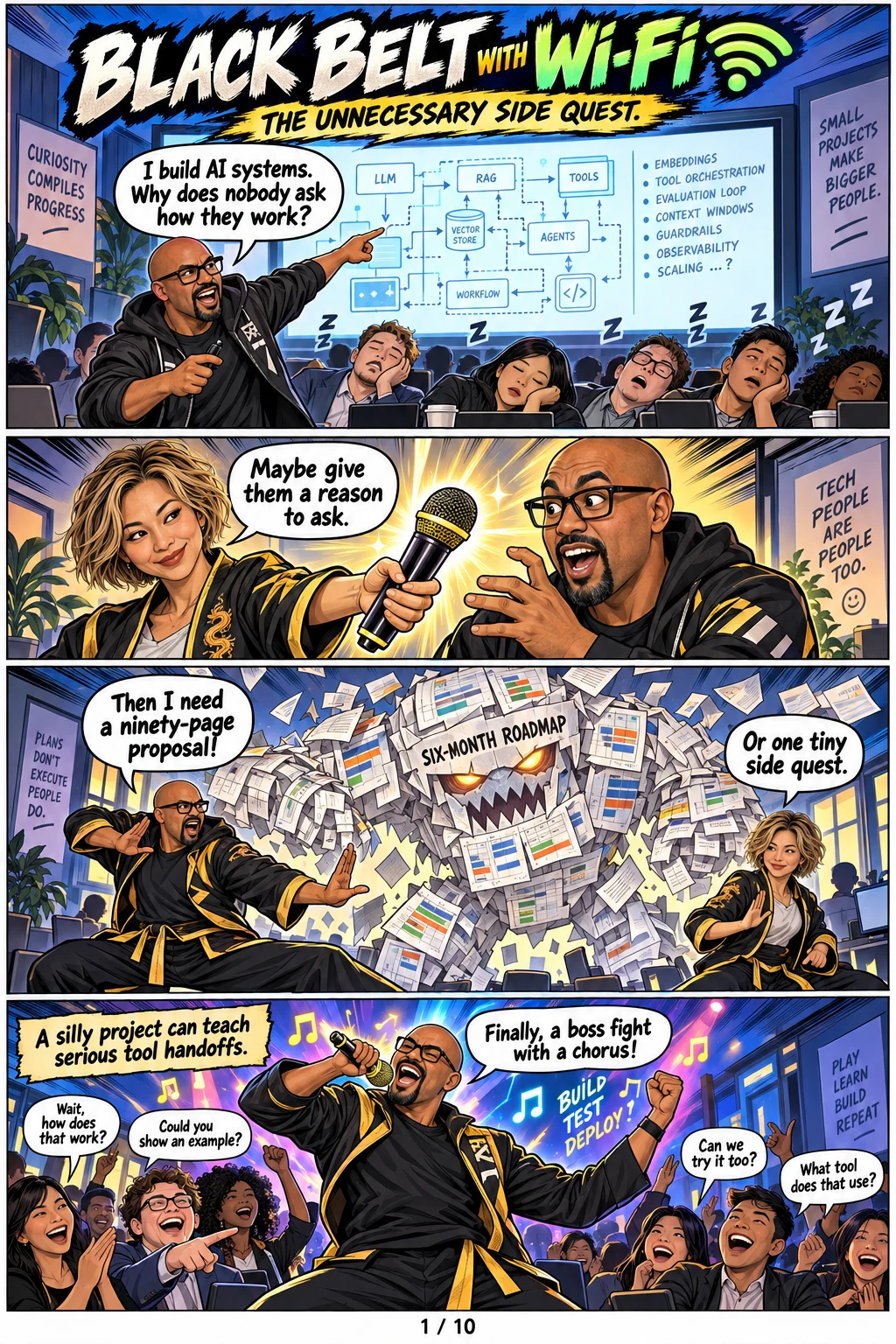
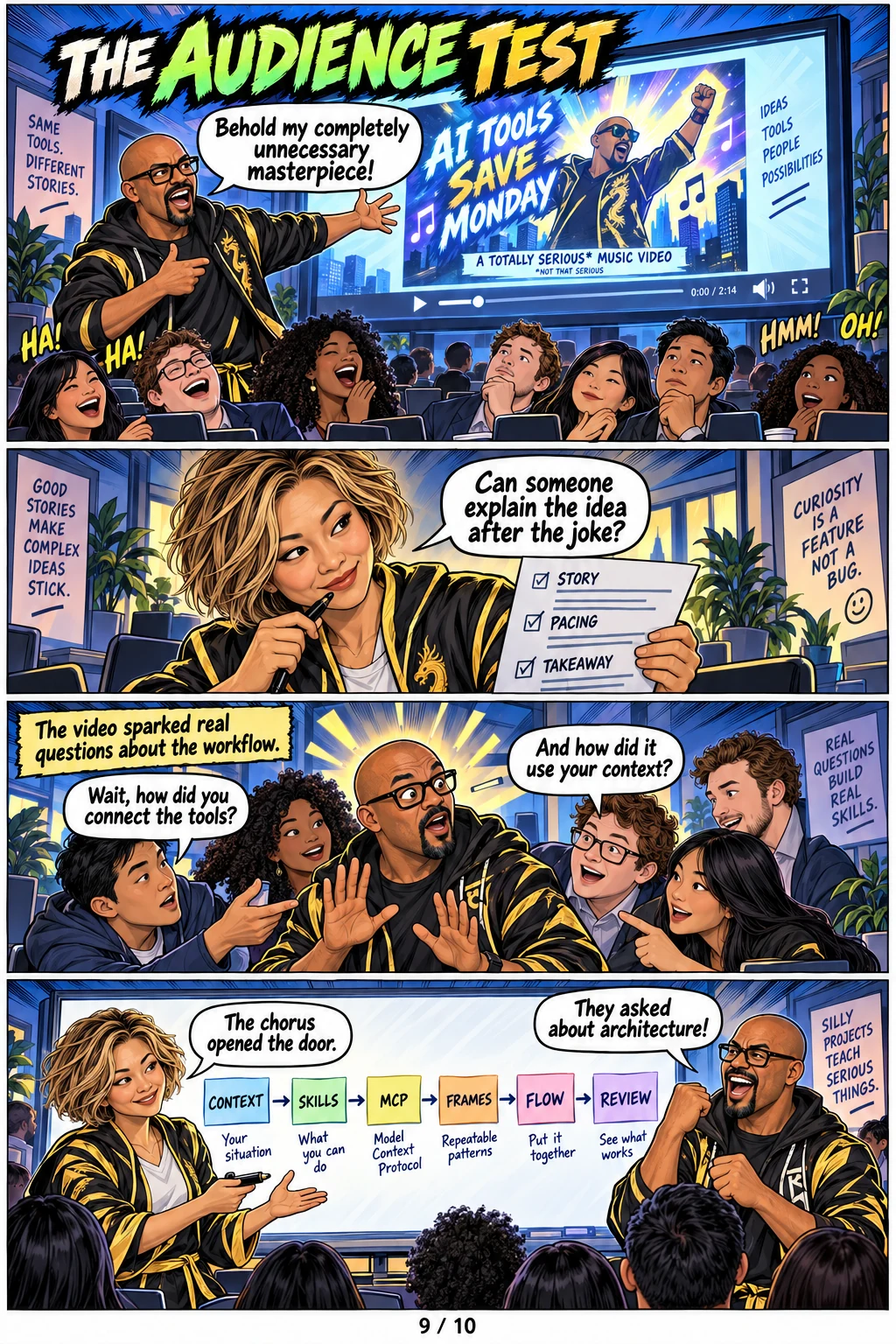
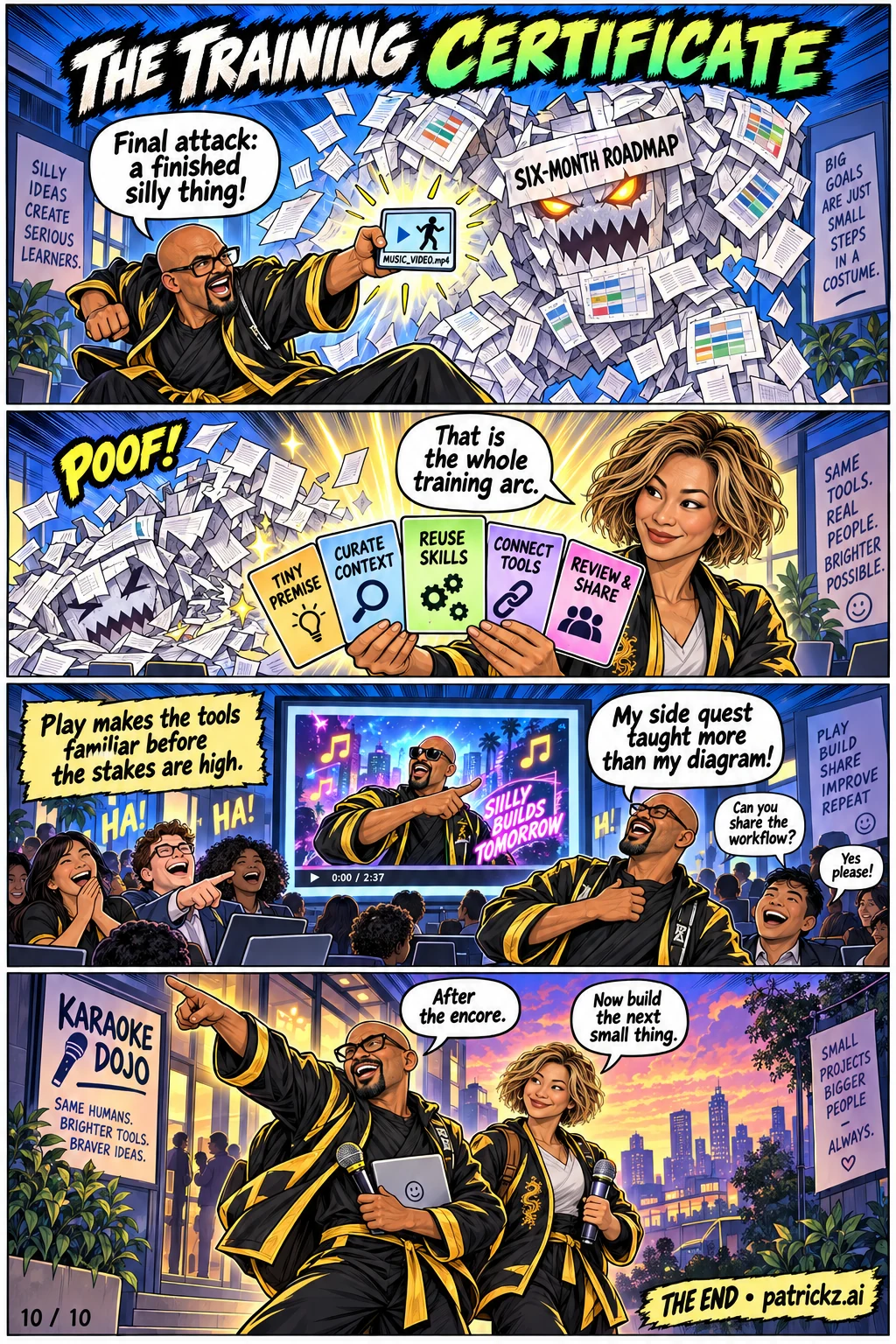
Patrick’s melodramatic AI music video made coworkers curious about the architecture behind it. A small creative project is a safe place to learn tool handoffs before a consequential one.
The tool stack Patrick described
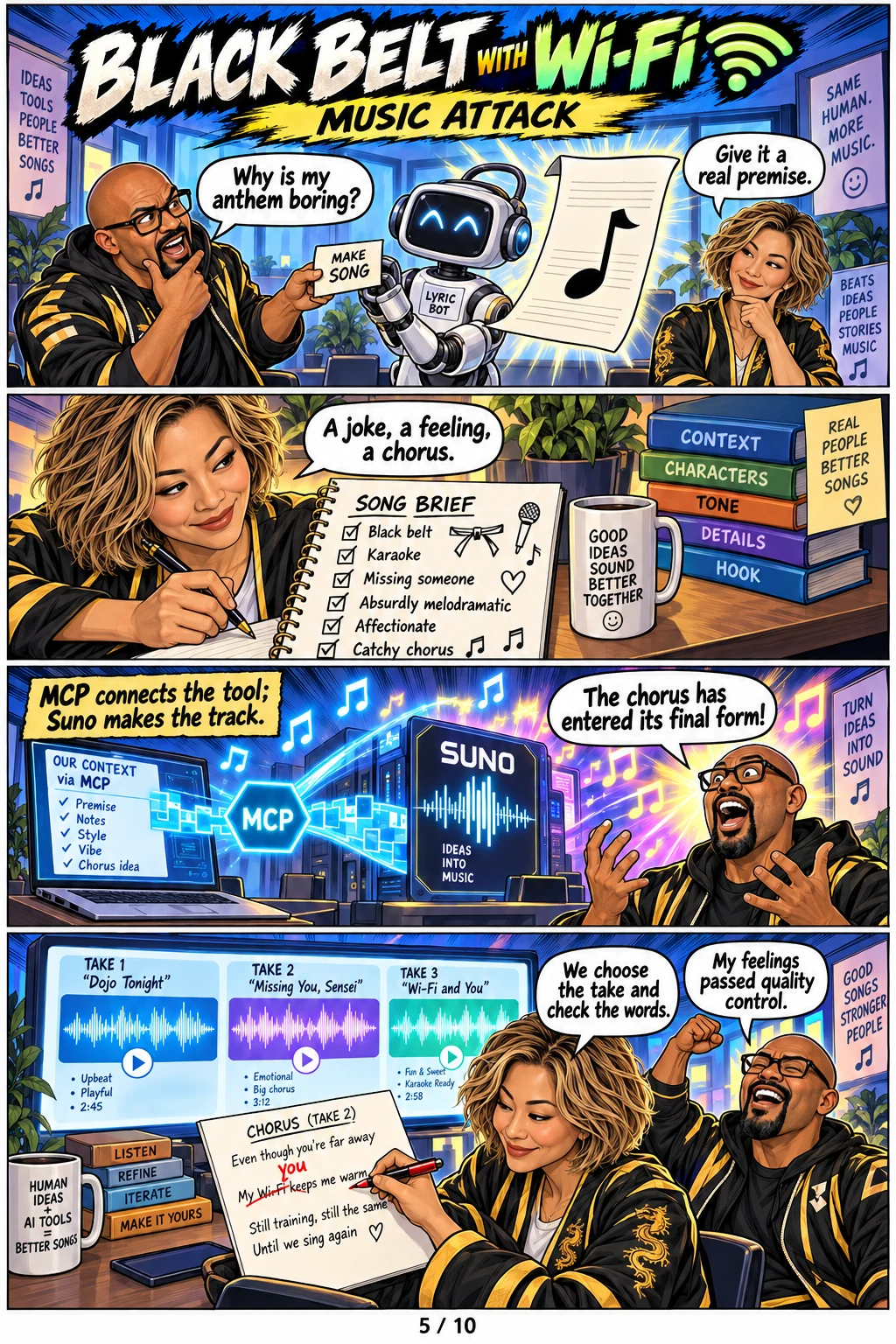
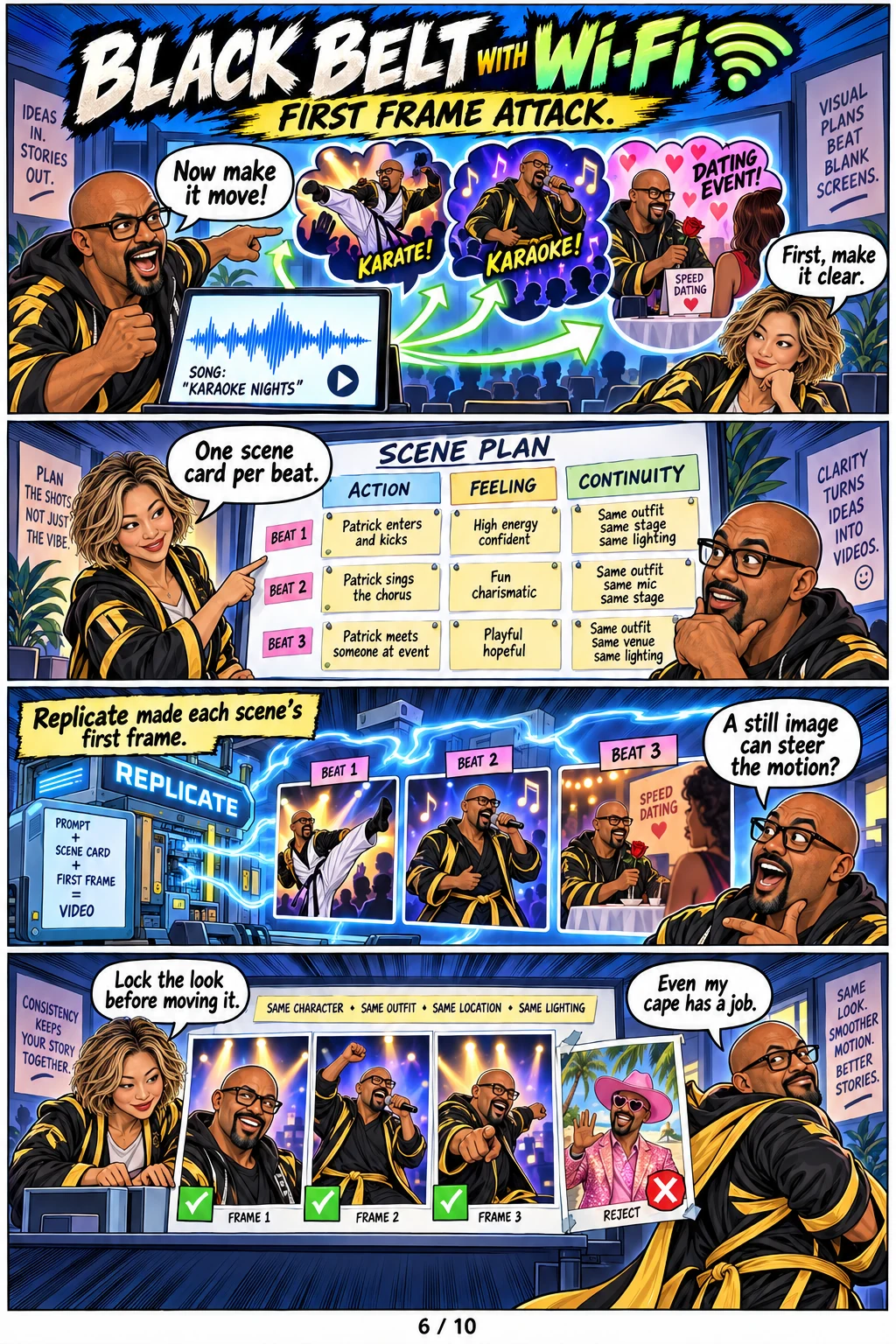
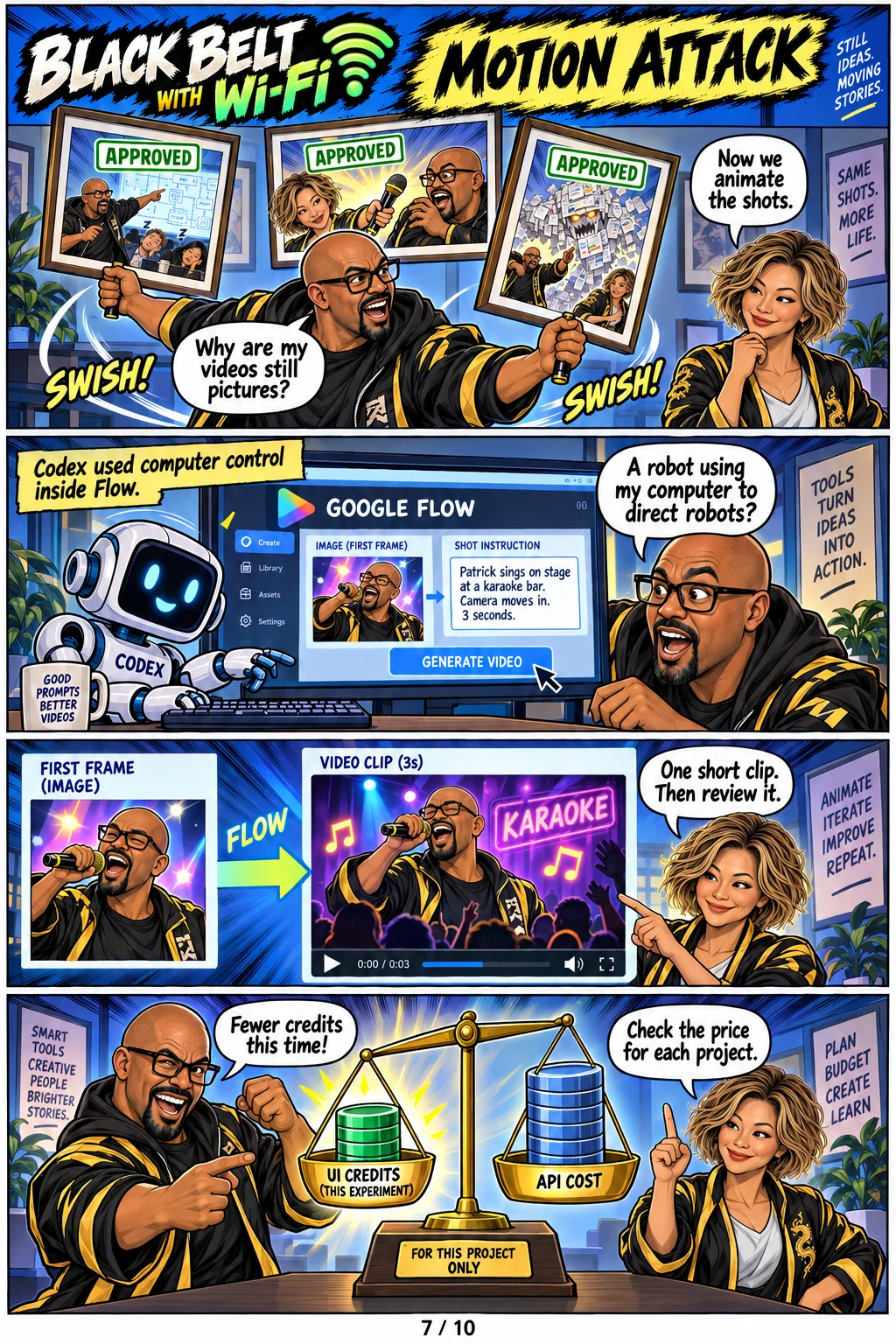
Journal RAG context supplied selected personal details for jokes. Reusable skills and examples from earlier video repositories informed prompts, shot design and song genre. MCP connected Suno for music and Replicate for each scene’s first frame. Codex computer use operated Google Flow to make video clips. The comic’s roadmap monster, dojo and superhero moves are fiction.
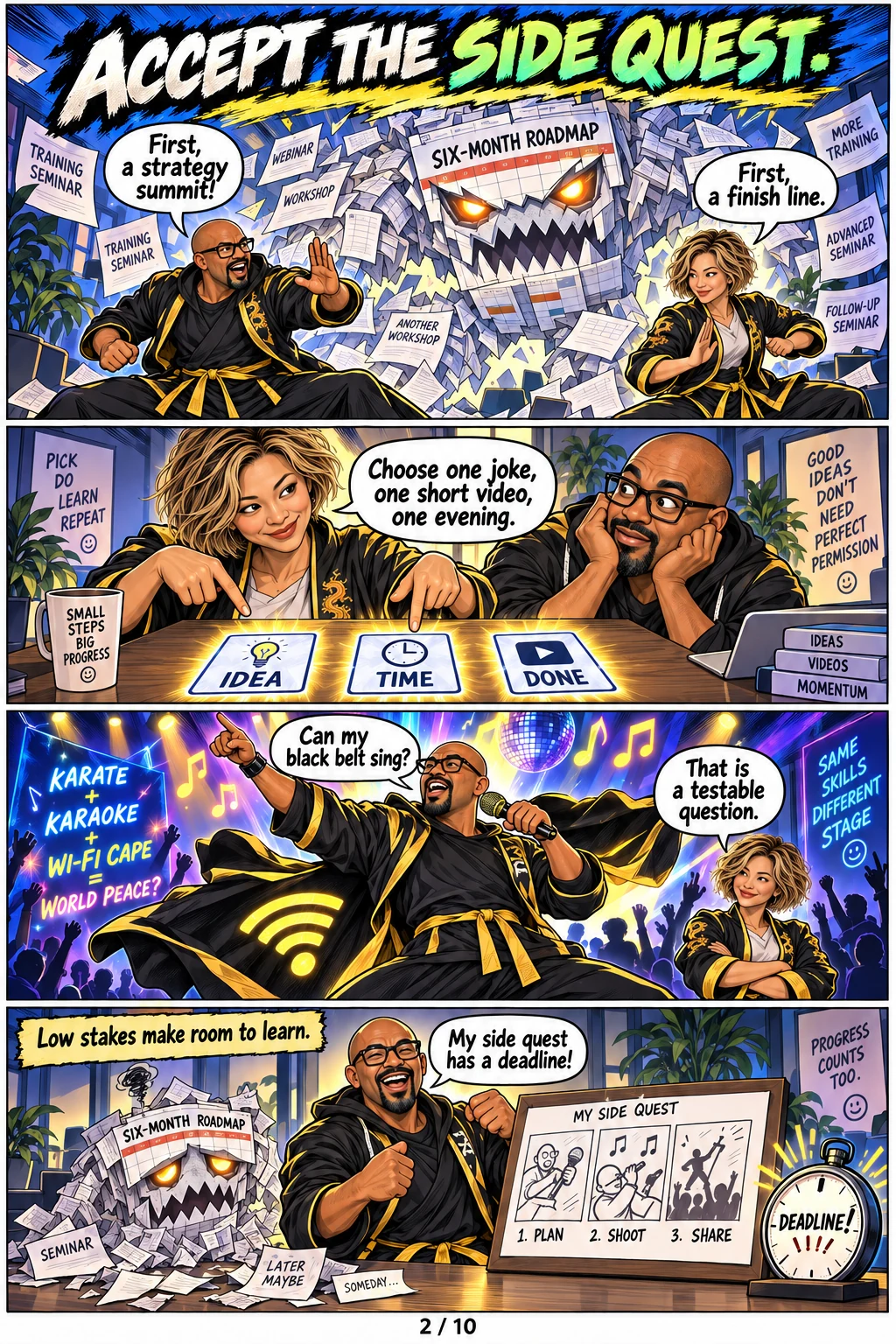
1. Choose a tiny side quest.
Write one sentence that would make someone curious: “A black belt with Wi-Fi sings a wildly serious love song.” Decide the output, time limit and finish line before choosing tools. A short video gives you enough moving parts to learn without requiring a large program.
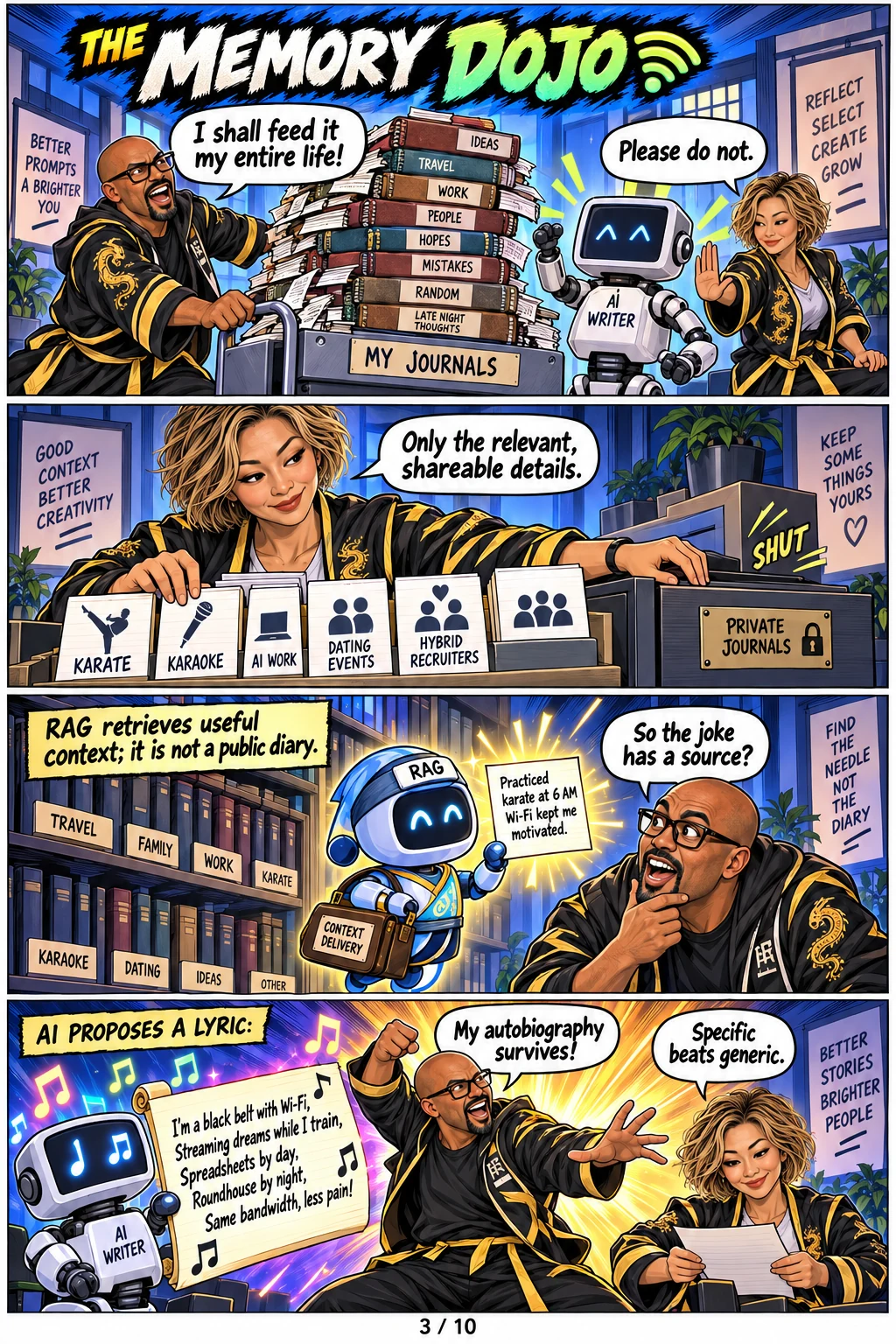
2. Curate context instead of dumping it.
List a few facts, recurring jokes and story tensions the work actually needs. Patrick used relevant journal context so the lyrics could refer to his AI work, karate, karaoke, dating events and unwanted hybrid-job pitches. Keep private entries private; share only details you have a reason and permission to publish. RAG should retrieve the small piece relevant to the current lyric or shot.
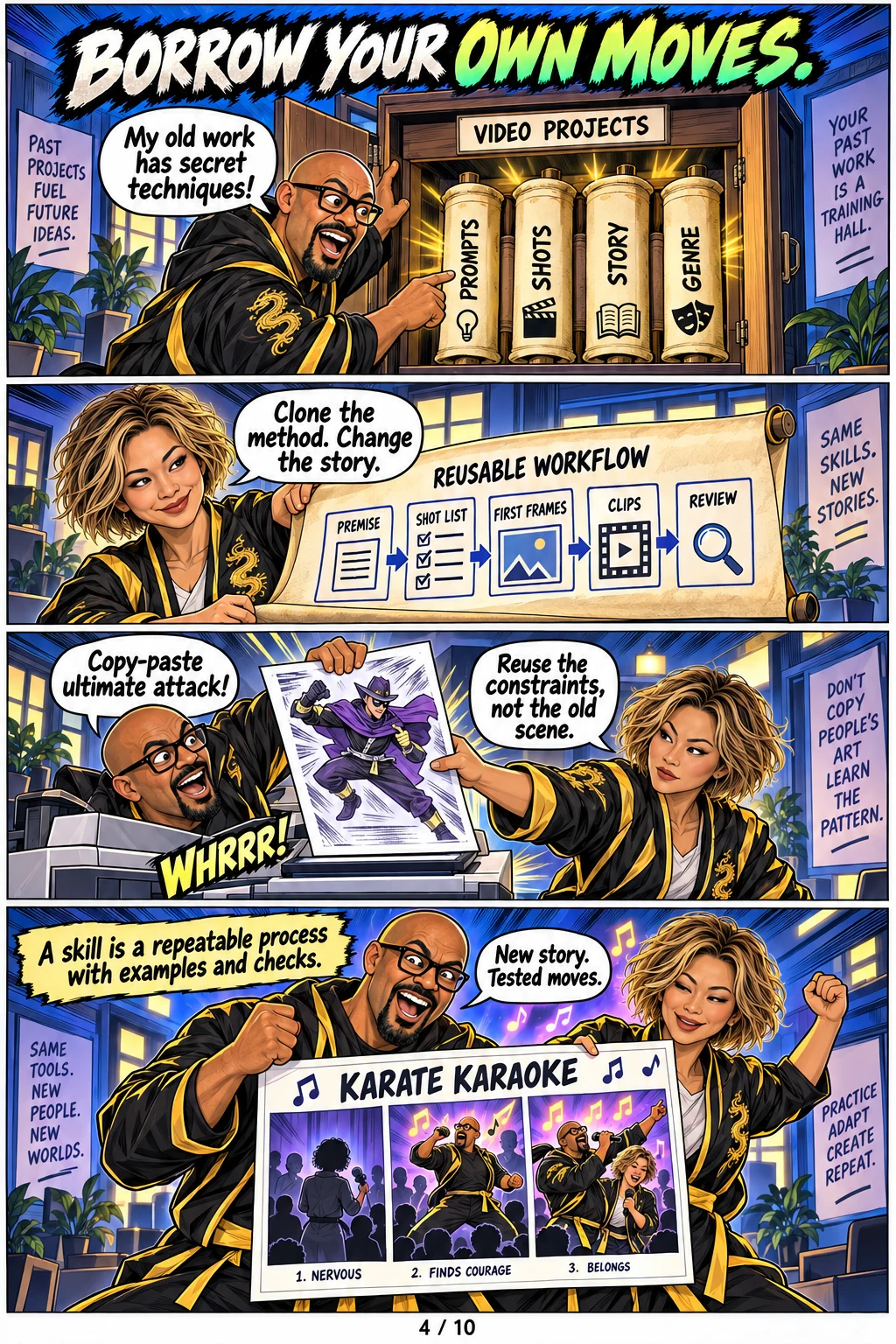
3. Reuse a skill, then make a new story.
A useful skill is a repeatable workflow with an example and a way to check the result. Patrick drew on earlier video repositories for prompt patterns, visual storytelling, shot design and genre selection. Clone a workflow you own or are allowed to reuse; keep its useful sequence and constraints, then replace the premise, references, characters and shots with your own.
4. Connect tools in a visible sequence.
Draft and review the song idea, generate music in Suno, turn the song into a shot list, generate a representative first frame for each scene in Replicate, then make short clips in Google Flow. MCP is the connection to the music and image tools; it is not itself the music or image generator. Codex’s computer use operated the Flow interface in Patrick’s experiment. His post says that route spent fewer credits than using more expensive API calls for everything in that project; compare current options for yours.
5. Review before you scale, then share the method.
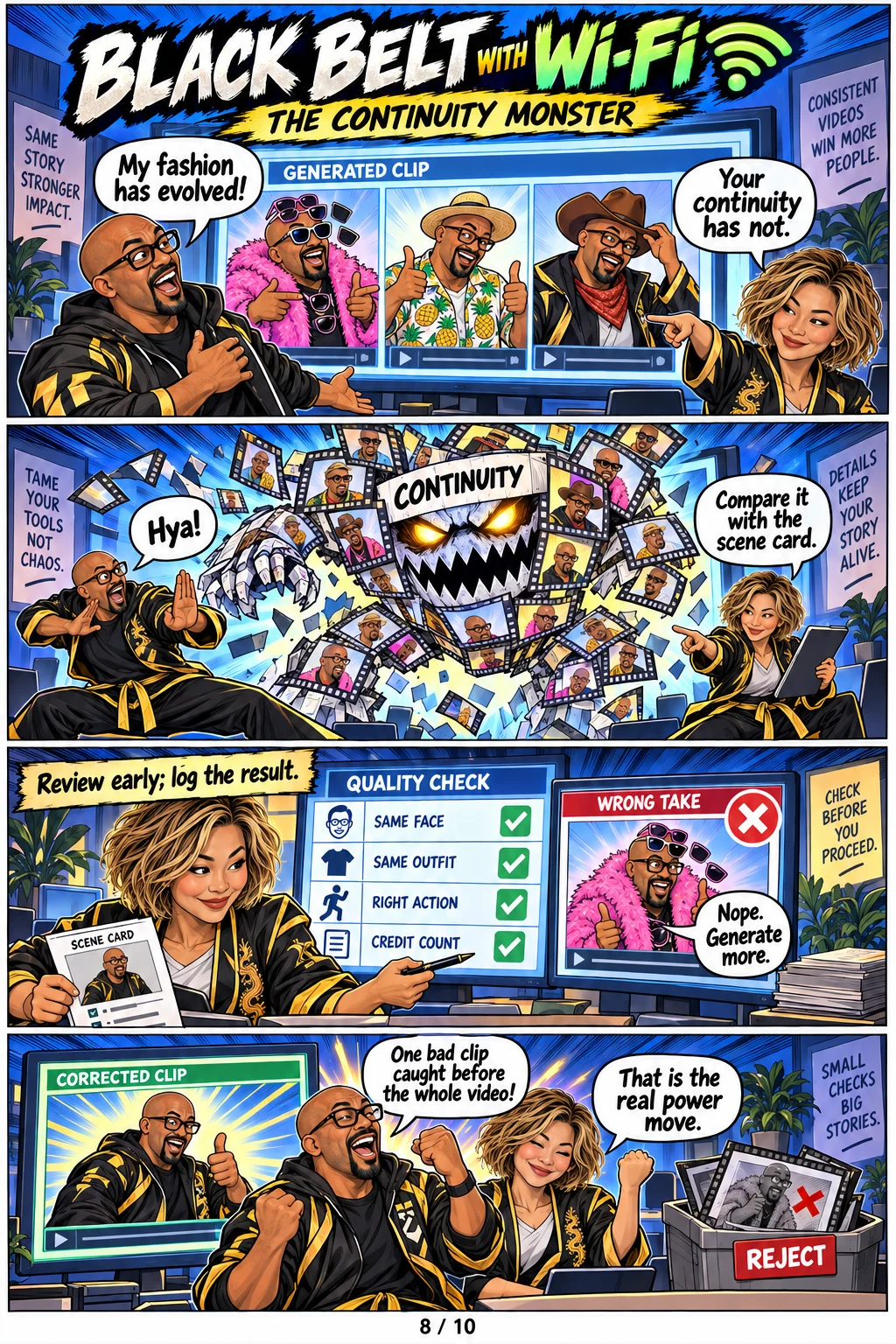
Check the first song take and first clip before generating many. Compare each output with its scene card: same person, action, clothing, location, visual tone and source facts. Keep a short record of what worked and what you rejected. Once the artifact is understandable, show it to someone and ask what they learned. The joke opens the door; the workflow explanation is the lesson.
Where the story came from
Read Patrick’s original LinkedIn post ↗. It names the tools and describes the personal context and skills that shaped the video. This guide adds a practical exercise and review checks; it does not claim that every fictional event in the comic happened.